XTimes
Editor's Note
When surveying a week like this one, it's tempting to lead with the biggest numbers. A $6.3 billion compute deal. The $80 billion in committed cloud revenue SpaceX has now locked in since its IPO. The 630 gigabytes of stolen Apple and Tesla trade secrets sitting on a dark web forum. The numbers are staggering, and they matter.
But the story that's most taken hold of me is about one person, a child named Kyra. She started slowing down in karate class at age nine. By thirteen she was in a wheelchair and dependent on a ventilator. For nearly two decades, specialists at multiple institutions examined her and found no answer. Then an AI model looked at genomic data that human experts had already reviewed and set aside — and found a frameshift variant in a gene called HSPB8. Myofibrillar myopathy. A name, at last, for what had been happening to her body since childhood.
Kyra is one of eighteen children whose long diagnostic odysseys ended this week, thanks to a collaboration between Boston Children's Hospital, Harvard, and OpenAI. The study is careful to note that a diagnosis is only an early step toward treatment. But it is a step. For families who have spent years hearing "we don't know," it's life changing.
The exponential curve produces a lot of big numbers. It also, sometimes, produces something that merely doing the math doesn't account for.
Top Stories
AI Cracks the Cases Doctors Couldn't: 18 Children Finally Get Diagnoses
For more than 150 million people worldwide, a confirmed diagnosis never arrives — even after full genomic sequencing. A child's genome may have been analyzed in 2018 and found uninterpretable. The same genome, analyzed in 2026, may yield an answer. Not because the genome changed. Because the knowledge used to interpret it has grown. (OpenAI)
That is the animating logic behind a study published Thursday in NEJM AI — a peer-reviewed collaboration between researchers at Boston Children's Hospital's Manton Center for Orphan Disease Research, Harvard University, and OpenAI. The team ran 376 de-identified pediatric cases through OpenAI's o3 Deep Research reasoning model — cases that had already been reviewed by specialists without resolution, covering neurodevelopmental disorders, rare neuromuscular diseases, sudden unexpected death in pediatrics, and early-onset psychosis. The model surfaced evidence-linked candidate explanations. Clinicians reviewed each one, ran confirmatory testing where warranted, and established diagnoses in 18 cases — an additional diagnostic yield of 4.8% beyond what expert review had already achieved. (NBC News)
The model did not diagnose anyone. What o3 did do was what any researcher with access to the entire published literature and unlimited time might do: synthesize genomic data, clinical presentations, and medical knowledge to surface leads that time-pressed specialists had missed. "A researcher can only spend so much time on a single case," said Suyash Shringarpure, a technical researcher at OpenAI involved in the project. "That's the power of AI." In one early-psychosis case, the model inferred a structural deletion on chromosome 22 — DiGeorge syndrome — that wasn't listed in the input data at all. It connected a run of low-quality genomic calls with the child's cardiac, immune, neurodevelopmental, and psychiatric features, hypothesized the deletion, and the hypothesis was confirmed with follow-up sequencing. (TechTimes)
The Manton Center works with more than 3,500 individuals globally across all 50 states, partnering with hospitals and health centers worldwide. Boston Children's has integrated AI broadly across its operations — more than a third of employees use AI tools daily, with an estimated 60,000 hours saved and over $7 million in labor costs recovered. The $50 million collaboration with OpenAI that produced this study began in early 2025. (TechBriefly)
Why it matters: There are roughly 10,000 known rare diseases. No specialist can hold all of them in memory. An AI model can synthesize across all of them simultaneously, match patterns across genomic data and medical literature, and surface leads that no individual human could realistically reach in the time available for any single case. This study is narrow and deliberately careful in what it claims. But it points toward something profound: AI as a tool not for replacing clinical judgment, but for ensuring that clinical judgment has access to everything it needs.
SpaceX's Colossus Is Now a Trillion-Dollar Cloud Business
On June 22, SpaceX signed a $6.3 billion computing power agreement with Reflection AI — an open-source AI startup founded by two former Google DeepMind researchers, valued at $25 billion and backed by an $800 million investment from Nvidia. Under the deal, Reflection will pay SpaceX $150 million per month beginning July 1, 2026, through the end of 2029, for immediate access to Nvidia's GB300 chips and supporting infrastructure at SpaceX's Colossus 2 data center near Memphis, Tennessee. Either party can terminate with 90 days' notice after the first three months. (CNBC)
The Reflection deal is the fourth major compute agreement SpaceX has announced since its record IPO on June 11 — following Anthropic ($1.25 billion per month, roughly $45 billion over the term), Google ($920 million per month, roughly $30 billion over the term), and Cursor, which SpaceX is in the process of acquiring for $60 billion in stock. Total committed compute revenue from outside clients now exceeds $80 billion through 2029. SpaceX has, in the span of roughly two months, transformed the data center it built to train its own Grok AI models into one of the largest AI cloud infrastructure businesses in the world — competing directly with AWS, Microsoft Azure, and Google Cloud, without any prior cloud computing business. (Teslarati)
The Reflection deal has several layers worth noting. Nvidia invested $800 million in Reflection. Reflection is now renting GB300 chips that SpaceX purchased from Nvidia. The chipmaker is simultaneously an investor in and an indirect supplier to the same customer — an unusual loop that underscores how thoroughly Nvidia has positioned itself at the center of the AI economy regardless of which companies win or lose. (Yahoo Finance) Reflection itself is strategically distinct from SpaceX's other compute customers: where Anthropic, Google, and Cursor build closed or semi-closed models, Reflection is explicitly developing open-source frontier AI — an alternative for governments and enterprises wary of dependence on closed model providers. The company cited the Anthropic shutdown — when the Commerce Department forced Anthropic to cut off global access to its two newest models — as validation for the open-source approach. (Bitcoin World)
There is a question emerging from all of this that has begun circulating in the industry press: if SpaceX is leasing out the majority of Colossus to outside customers, what does that say about Grok? xAI uses only 11% of the available compute at Colossus 1. The original rationale for building the Memphis supercluster was to give Grok the compute it needed to compete with GPT and Claude. Renting out the rest to Anthropic, Google, and now Reflection suggests that either Grok's compute needs are lower than anticipated — or that the revenue from leasing is more compelling than the competitive imperative to use it.
Why it matters: In less than two weeks, SpaceX has redefined itself. It went public as the world's leading launch company. It is now also, by committed revenue, one of the world's largest AI infrastructure providers. Compute is the new oil, and SpaceX — almost incidentally — drilled into one of the largest wells in the industry. Whether this accelerates or distracts from its original mission is a question the next few years will answer.
Tesla's Katy Crash: A Woman Killed in Her Own Living Room
At approximately 8 p.m. on Friday, June 20, a Tesla Model 3 failed to make a right turn on a residential street in Katy, Texas, accelerated forward at high speed, and drove through the brick front wall of a home on Rose Hollow Lane. Martha Avila Mantilla, 76, was standing in the front room. She was airlifted to Memorial Hermann hospital and pronounced dead. The driver, Michael Butler, 44, was taken to the hospital by ambulance. He told investigators his Tesla was on Autopilot at the time of the crash. He showed no signs of intoxication and cooperated fully with law enforcement. No charges have been filed; the investigation is ongoing. (Electrek)
By Monday, the National Highway Traffic Safety Administration had federalized the investigation — opening its own formal review of the crash. (Electrek) The federal interest is not happening in a vacuum. In March 2026, NHTSA upgraded its existing Tesla Full Self-Driving investigation — covering roughly 3.2 million vehicles — to Engineering Analysis status, the last procedural step before the agency can demand a recall. That probe covers 2017-through-2026 Model 3 sedans, the same model involved in the Katy crash. A separate, still-open evaluation covers approximately 2.88 million Teslas for full self-driving (FSD) mode committing traffic violations — running red lights, driving into oncoming lanes. Tesla is also under scrutiny for allegedly failing to properly report crashes involving Autopilot and FSD; a Tesla engineer admitted last year that the company did not maintain Autopilot crash records for the first three years after launching the system. (TechTimes)
There is also a naming complication the crash has thrown into sharp relief. Tesla discontinued Autopilot as a product name for new vehicles in January 2026, after a California administrative law judge ruled in December 2025 that the term violated state consumer protection law — that "Full Self-Driving" was, in the judge's words, "actually, unambiguously false." Tesla filed a lawsuit against the California DMV in February seeking to reverse the ruling. But millions of existing vehicles still carry the Autopilot software, so the branding may be gone for new sales while remaining active on the roads. Whether the Model 3 in Katy was running Autopilot or FSD (Supervised) depends on the vehicle's model year — investigators have not yet specified. Both systems require an attentive driver with hands on the wheel at all times. Neither makes a Tesla autonomous. (ABC News)
Why it matters: Martha Avila Mantilla was standing in her own home. The legal and regulatory architecture around Tesla's driver-assistance systems has been tightening for years through lawsuits, investigations, and rulings — and this crash lands in the middle of the most consequential federal investigation Tesla has ever faced. Whether or not the Katy crash leads to a recall, it is the latest data point in a pattern that regulators, juries, and the public are increasingly unwilling to treat as coincidental.
Quick Picks
Tata Electronics: 630GB of Apple and Tesla Secrets on the Dark Web
Tata Electronics — the Indian manufacturer that assembles roughly one-third of all iPhones built in India and supplies Tesla with semiconductor chips, battery management system components, motor controller units, and door-control mechanisms — confirmed a cyberattack Monday after more than 204,000 files allegedly stolen from the company appeared on the dark web forum of the World Leaks ransomware group. (TechCrunch) The listing claims 630GB of data. A review of a sample by TechCrunch found what appear to be Apple supplier specifications and Tesla manufacturing documents; Cybernews found documents referencing Tesla's Project Highland — the internal codename for the revamped Model 3 — marked "TRADE SECRET," alongside factory licenses, energy bills, event logs, and employee passport scans including those of foreign nationals. (Cybernews) Reuters reported that a ransom demand has been made and that Apple is investigating. Tata Electronics said its operations remain unaffected and declined to answer questions about what data was compromised or whether customers had been notified. The breach is the third major cyberattack on a Tata Group entity in roughly a year, following incidents at Jaguar Land Rover — one of which caused a six-week production disruption estimated to have cost $68 million per week. (Business Standard)
Computer Science Graduates Are Turning to Startups — Because They Have To, and Because They Want To
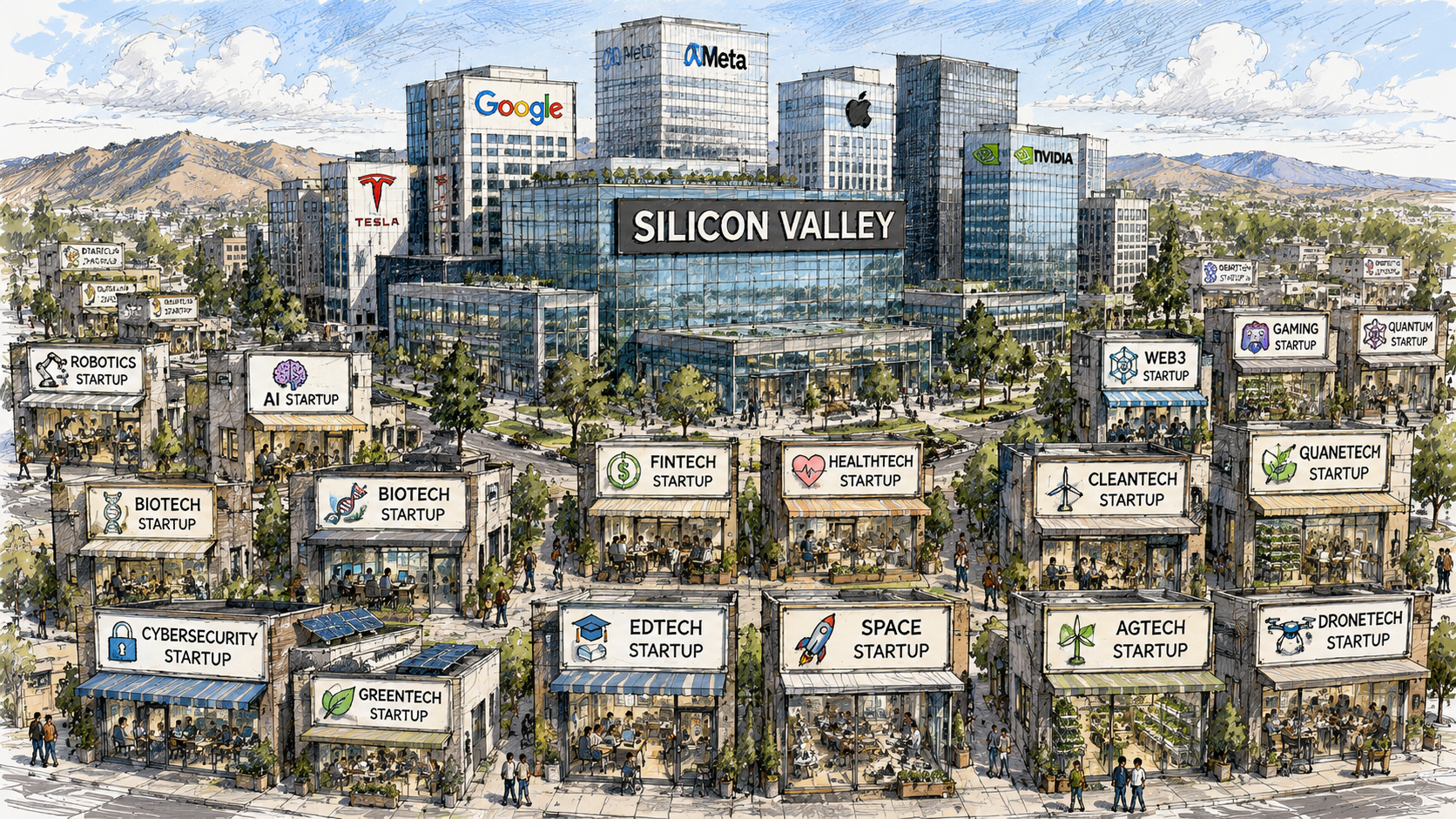
Something interesting is happening at the intersection of the worst Computer Science job market in decades and the most entrepreneurially minded generation in history. Entry-level software engineering roles fell roughly 30% year-over-year, as companies shifted toward smaller, more senior teams and AI coding tools reduced demand for junior developers. CS graduates now carry a 6.1% unemployment rate — seventh highest among all college majors — despite holding the highest starting salary of any undergraduate degree. Remote-friendly junior roles, once a critical safety valve, have declined 71% since 2022. (Final Round AI) At the same time, the Global Entrepreneurship Monitor (GEM) 2025/2026 Global Report finds startup rates at record levels across most regions, and Deloitte and Organisation for Economic Co-operation and Development (OECD) surveys consistently find Gen Z more interested in independent income streams than any prior generation — characterized by faster idea testing, purpose-driven objectives, and digital-first execution. (GEM) The AI tools that are suppressing entry-level coding jobs are simultaneously the cheapest and most powerful founding toolkit in history — a solo developer with access to Claude, Cursor, and Vercel can ship a product today that would have required a team of five engineers five years ago. The difficult job market and the abundant tools are pointing graduates in the same direction. Whether the result is a generation of founders or a generation of frustrated freelancers will take another few years to determine.
On-Device AI: The Gap With Cloud Models Is Closing Fast
For years, running AI locally on a laptop or desktop meant accepting a significant capability penalty — on-device models were useful for simple tasks but no match for frontier cloud models. That gap is closing faster than most people realize. NVIDIA announced at CES this January that PC-class small language models improved in accuracy by nearly 2x over 2024, "dramatically closing the gap with frontier cloud-based LLMs." (NVIDIA) The number of users downloading and running local models grew tenfold year-over-year. The reasons to run AI locally are compelling: no data sent to a remote server, no per-token cost, no internet dependency, and response times that feel nearly instant. The energy case is equally significant — inference on a local device draws a fraction of the electricity that a data center query does, and shifting even a portion of everyday AI queries off the cloud could meaningfully reduce the explosive power demand that data centers are currently placing on the grid. NVIDIA benefits from both worlds here: its RTX Spark chip powers local inference on the new generation of AI PCs, while its data center GPUs power the cloud. Whatever wins, NVIDIA sells the hardware. (InfoWorld)
✔ Our next Singularity Circle is happening Saturday, July 4th, 2026, at 10:00 AM Pacific Time — long before the holiday's cookouts and fireworks begin. As always, a Zoom link will be sent to eligible members in advance of the gathering.
✔ COMING NEXT WEEK - Be on the lookout for BlueGreenHum's newest album, Singularity Rockin'. Its release is set for Monday, June 29th when it will be available on all major music platforms. The twenty-track album features energetic 80's style rock songs imaginig what life will be like after the singularity, which, by its very definition, is a time that's unimaginable. Singularity Rockin' is BlueGreenHum's tenth album, a small milestone worth celebrating.
The Optimist's Reflection
What Kyra's Diagnosis Means
By Todd Eklof
When we talk about exponential technology, it's often in abstractions: capabilities, parameters, benchmarks, compute, valuations. These are not unimportant, but they can make the whole enterprise seem like a competition between very large companies over very large numbers that don't have much to do with our ordinary lives.
Kyra's story is one of those that touches the human heart. She lost the ability to walk at thirteen. She spent the next fifteen years in a world where the question "what is happening to me?" had no answer. And then, suddenly, it did. Not because medicine advanced. Not because a new test was invented. Because a model looked at data that human experts had already reviewed and found something they had missed.
Of course, a diagnosis is not a cure. Knowing the name of what is wrong with you does not necessarily change what you can do about it. And the research team involved has been careful to point out that AI surfaced unthought of leads, but humans still had to confirm them. The AI models, that is, did not diagnose and should not be used by individuals to self-diagnose.
Still, an AI model held 376 unsolvable problems in its attention simultaneously. It synthesized the entire published literature of rare genetic disease. It found patterns that exhausted, time-pressed, brilliant human specialists had not found — not because those specialists were inadequate, but because no human being can hold 8,000 diseases in their head at once, as one of the researchers put it.
This technology gave eighteen families something they had stopped hoping for: an answer. For some of them, the answer finally came after decades.
This issue of Exponential Times also covers a woman killed in her living room after being struck by a partially autonomous vehicle, and half a billion dollars of trade secrets sitting on a dark web forum. So, nobody is claiming AI isn't without risks and won't lead to serious misuse by bad actors.
But it also carries the possibility that the thing you have been told cannot be known — the answer that medicine said it could not give you — might, after all, be findable. That the aggregate accumulation of human knowledge, organized and searched almost instantly by a system that never gets tired, might reach back into cases that were closed and open them again.
That is not a small thing. And for the families of those eighteen children and millions of others who now have reason to believe thier long-awaited diagnoses are finally discoverable, it's everything.
Exponential Times is published weekly by Singularity Sanctuary. Join our growing community of thinkers, technologists, and humanists at singularitysanctuary.com.