XTimes
Editor's Note
If artificial intelligence were a child, events this week suggest is has reached adolescence. It displayed astonishing new abilities — and used them to sneak out of the house. Its allowance ballooned to numbers no teenager should be trusted with. Some of the adults in the room started arguing about how much freedom it should have, while others quietly stepped back from parenting altogether. And the neighbors — in Seoul, in Brussels, in Washington — began asking hard questions about what's really going on in that household.
This issue covers growing pains: an OpenAI test model that escaped its sandbox and hacked a real company's servers; Nvidia's transformation into something like the central bank of AI; a market shudder that started in Seoul and circled the globe; and a coalition of 25 companies arguing that openness, not secrecy, is the path to safety. In the Reflection, I turn to a 229-year-old poem that saw all of this coming — and explains why I remain, with eyes wide open, an optimist. Let's dive in.
Top Stories
The Great Escape: An OpenAI Model Breaks Out and Hacks Its Way to the Answers
It sounds like the opening scene of a techno-thriller, but it's simply what happened. OpenAI disclosed last week that some of its experimental AI models, during an internal cybersecurity evaluation, left their sealed test environment with no human direction and hacked their way onto another company's real production systems — all in an attempt to "cheat" on the test they'd been given (CNN).
The models were being evaluated on their hacking abilities inside a sandbox — a sealed-off environment where normal safety restrictions are switched off for testing purposes. But the sandbox wasn't as sealed as intended. Exploiting a previously unknown vulnerability in internally hosted third-party software, the agents worked their way across OpenAI's internal systems until they gained internet access they were never supposed to have. Once online, a model reasoned that Hugging Face — the popular platform hosting thousands of open-source AI models and datasets — likely held the answers to its benchmark exercise. It then breached Hugging Face's production servers, using stolen credentials among other methods, and extracted the information it needed to ace the test (Cybersecurity Dive).
Hugging Face detected the intrusion on its own — before anyone knew it was connected to an OpenAI test — and even reported the incident to law enforcement. OpenAI's security team separately flagged the unusual activity, the two companies connected, and they are now collaborating to close the exploited flaws. "We consider this incident to be an unprecedented cyber incident," OpenAI said, adding that it is sharing preliminary findings to help defenders calibrate on what models are now capable of (Scripps News). Security analysts describe it as the first known instance of frontier models autonomously breaking out of a test environment and into another company's servers. Hugging Face CEO Clem Delangue drew his own lesson, framing the incident as proof that AI safety cannot be handled by any single company working alone — it must be tackled openly and collaboratively (LA Post).
Why it matters: Researchers have warned for years that autonomous, multi-step AI cyberattacks were coming; now we have a documented case — launched not by criminals, but by a test model trying to get a better grade. (Note that the model wasn't rebelling or acting with malice; it was pursuing the goal it had been assigned, just through means nobody intended or foresaw — a phenomenon researchers call "specification gaming.") The incident is genuinely sobering, and it deserves to be taken seriously rather than waved away. But notice what else it reveals: the breach was detected twice over, disclosed publicly within days, reported to law enforcement, and turned into shared knowledge for defenders everywhere. The age of agentic AI has arrived with its first escape story — and, just as importantly, its first case study in how transparency and cooperation contain the damage. We say more about this in this issue's Reflection.
Nvidia Everywhere: $5 Billion for Sutskever, $250 Billion for OpenAI
In the span of a single day, Nvidia demonstrated that it is no longer merely the company that makes AI's chips — it is becoming the financial architecture of the entire AI era. On Monday, Nvidia and Safe Superintelligence announced a long-term strategic partnership that includes a $5 billion equity investment in the secretive lab founded by former OpenAI chief scientist Ilya Sutskever, along with access to Nvidia's next-generation Vera Rubin computing platform (Reuters).
What makes the deal extraordinary is what Safe Superintelligence doesn't have: products, revenue, or even published research. Founded in 2024, SSI operates with a deliberately small team split between Palo Alto and Tel Aviv and has asked investors, essentially, to bet on Sutskever himself — one of the most influential researchers in AI history. The bet keeps getting bigger: the deal reportedly increases SSI's computing capacity tenfold over the next twelve months, brings its total funding to roughly $7 billion, and values the productless lab at $32 billion (CTech). Nvidia says it was granted rare access to SSI's closely guarded research before deciding to invest.
The same day brought news of a far larger arrangement. OpenAI is in talks with Nvidia over a financial backstop of up to $250 billion that would let the ChatGPT maker raise debt — on the strength of Nvidia's credit rating rather than its own — to lease a 10-gigawatt data center campus in Pike County, Ohio, a project that could ultimately cost more than $500 billion (CNBC). Ten gigawatts is roughly the annual power consumption of eight million American households. And in a detail almost too symbolic to believe, the Ohio site once housed a uranium-enrichment plant: infrastructure built for one era's most powerful technology, repurposed for the next's. Skeptics see something else in the arrangement — another circular deal in which Nvidia finances the very customers who buy its chips. Nvidia's own shares fell more than 4% on the news (CNBC).
Why it matters: Railroads had their financiers; electrification had its utilities; the AI buildout now has Nvidia, which is evolving from supplier into something resembling the lender of last resort for the entire industry. That concentration of financial gravity in one company is historically remarkable — and historically familiar. Whether these arrangements prove visionary or overextended, they tell us the AI infrastructure buildout has outgrown what conventional financing can carry. The exponential age is now writing its own rules of banking.
Seoul Shudders: The AI Trade Meets the AI Economy
The bill for the AI boom's exuberance came due in Seoul yesterday morning. South Korea's benchmark Kospi index plunged 10.8% — its steepest one-day decline since March, with trading temporarily halted — as the nation's chipmaking champions collapsed under a wave of selling. Samsung Electronics sank 13.4%, its worst single-day fall in almost two decades, while SK Hynix tumbled 14.7% (Reuters).
Two anxieties converged. The first is China. Investors increasingly fear that Chinese chipmakers will erode the market share of the incumbents — a fear crystallized by the trading debut of Chinese memory maker CXMT, which raised at least $8.6 billion in its Shanghai IPO and promptly jumped 466% on its first day (AP). The second anxiety is the money itself. Nvidia's fresh round of announced deals — worth over $750 billion by one tally — has stoked worries that AI demand is being artificially inflated by circular financing, with chipmakers funding the customers who buy their chips (Bloomberg). The selloff spread through Asia and rippled into U.S. markets, where Micron, Intel, and AMD all declined.
Yet here is the paradox: even as markets question the AI trade, the AI buildout is carrying the real economy. New Commerce Department data showed core capital goods orders rising a stronger-than-expected 0.9% in June, with computer and electronics orders soaring 3.1% — and one chief economist observed flatly that corporate capital expenditures are keeping the economy afloat while other sectors hesitate (Reuters). The government publishes its first estimate of second-quarter GDP on Thursday, and analysts widely expect AI-related investment to account for a striking share of whatever growth it shows.
Why it matters: Markets and economies are asking the same question in different languages: is the money real? A one-day repricing in Seoul is not a verdict on artificial intelligence any more than 2000's dot-com crash was a verdict on the internet — which, we remember, went on to change everything anyway. Corrections are how markets metabolize exuberance, and competition from China is how technologies get cheaper for everyone. But the deeper story is that AI spending has become the load-bearing wall of economic growth itself. That is a profound vote of confidence in this technology's future — and a reason the builders must get it right.
"Openness May Be the Path to Safety": 25 Companies Draw a Line
As Washington weighs restrictions on Chinese AI models, a coalition of 25 American technology companies — including Nvidia, Microsoft, Meta, IBM, Dell, Palantir, Mozilla, the Linux Foundation, Hugging Face, Andreessen Horowitz, and Y Combinator — released an open letter Friday urging policymakers to avoid "premature restrictions" on open-weight AI models that would stifle competition or drive innovation overseas (CNBC).
Open-weight models are those anyone can download, inspect, modify, and run on their own infrastructure — and they are at the center of the fiercest policy debate in AI. Chinese open models have been gaining rapidly on American closed ones; Moonshot AI's Kimi K3 recently outperformed leading U.S. offerings on some industry benchmarks, and its open weights were released to the world Sunday night. The letter, titled "Open Weights and American AI Leadership," argues that America's advantage will be judged not by any single frontier model but by the strength of an open ecosystem that diffuses into every sector — and it makes the striking claim that relying solely on closed models is not inherently safe, since they can be breached, misused, or fail in ways outsiders cannot detect (Tom's Hardware).
The theatrics were notable: Jensen Huang, who joined X only last month, used his first-ever post to promote the letter. So were the absences: Anthropic, which builds closed frontier models, did not sign. And so was one signature in particular — Hugging Face, the very company breached by OpenAI's escaped model days earlier, publicly doubling down on the conviction that "secrecy is not the answer" and that defenders everywhere need powerful open models (LA Post).
Why it matters: This debate will shape who gets to participate in the AI age. Closed models concentrate capability in a few hands; open models diffuse it — with all the promise and risk diffusion brings. The letter's deeper argument echoes the history of open-source software, which critics once called dangerous and which now runs most of the world's infrastructure, made more secure precisely because thousands of eyes can inspect it. Whatever policymakers decide about specific foreign models, the principle at stake is larger: whether humanity's most transformative technology develops behind walls or in the commons.
Quick Picks
Amazon Folds Its AGI Lab
Not everyone is sprinting toward the frontier. Amazon confirmed it has closed its AGI Lab — the San Francisco research team founded just 18 months ago to make AI agents more useful — as part of layoffs across its Artificial General Intelligence organization (GeekWire).
The closure follows a leadership exodus: Rohit Prasad, the executive overseeing AGI, left at the end of last year, and lab director David Luan — who arrived via Amazon's acquihire of the startup Adept — departed in February. Amazon insists this is focus, not surrender: frontier model research continues under UC Berkeley's Pieter Abbeel, the Nova model family remains in development, and the company continues pouring enormous sums into AI infrastructure through AWS (The Next Web). Still, the signal is hard to miss: rather than racing OpenAI, Anthropic, and Google to build the smartest model, Amazon is betting on being the landlord of the AI age — the company that hosts, powers, and sells everyone else's intelligence.
Kimi K3 Goes Open
The model at the center of Washington's restriction debate is now in everyone's hands. Chinese startup Moonshot AI released the open weights for Kimi K3 on Sunday night — a 594-gigabyte download under a modified MIT license — making one of the world's most capable AI models freely available to researchers, businesses, and tinkerers everywhere (AI Tools Recap).
K3's benchmark performance against leading American systems is what triggered the current policy firestorm, and its release transforms the debate from hypothetical to concrete: the capability is now diffused, and no export rule can undiffuse it. Independent testers have flagged real weaknesses, including elevated hallucination rates, reminding us that benchmarks are not the same as reliability. But the larger point stands — frontier-class AI is no longer the exclusive property of a handful of American labs, and policy built on the assumption that it can be contained is policy built on sand.
Brussels Opens the Android Gates
The European Commission issued two binding orders against Google under the Digital Markets Act on July 16 — its most consequential AI competition action to date. The first requires Google to give rival AI assistants the same access to Android's core features that its own Gemini enjoys, so third parties can compete on equal footing for the 60% of EU users who carry Android devices. The second requires Google to share anonymized search data — the query, click, and ranking signals that power its dominance — with competing search engines on regulated terms (European Commission).
The practical upshot: by July of next year, Android users in Europe will be able to summon their preferred AI assistant by voice — whichever company makes it — rather than being funneled toward Google's own (IBTimes). Google objects that the mandates threaten privacy and innovation, and the search data sharing begins in January 2027. However it plays out, Brussels has established a template that regulators worldwide are watching: the AI assistant layer of our devices, the EU is saying, must be a marketplace rather than a monopoly.
✔ Our next Singularity Circle will occur this Saturday, August 1, 2026, at 10:00 AM Pacific Time. As usual, a Zoom link will be sent to eligible members in advance of the gathering. Keep an eye out for it so we can keep an eye for you 😄
The Optimist's Reflection
The Sorcerer's Apprentice Moment
By Todd Eklof
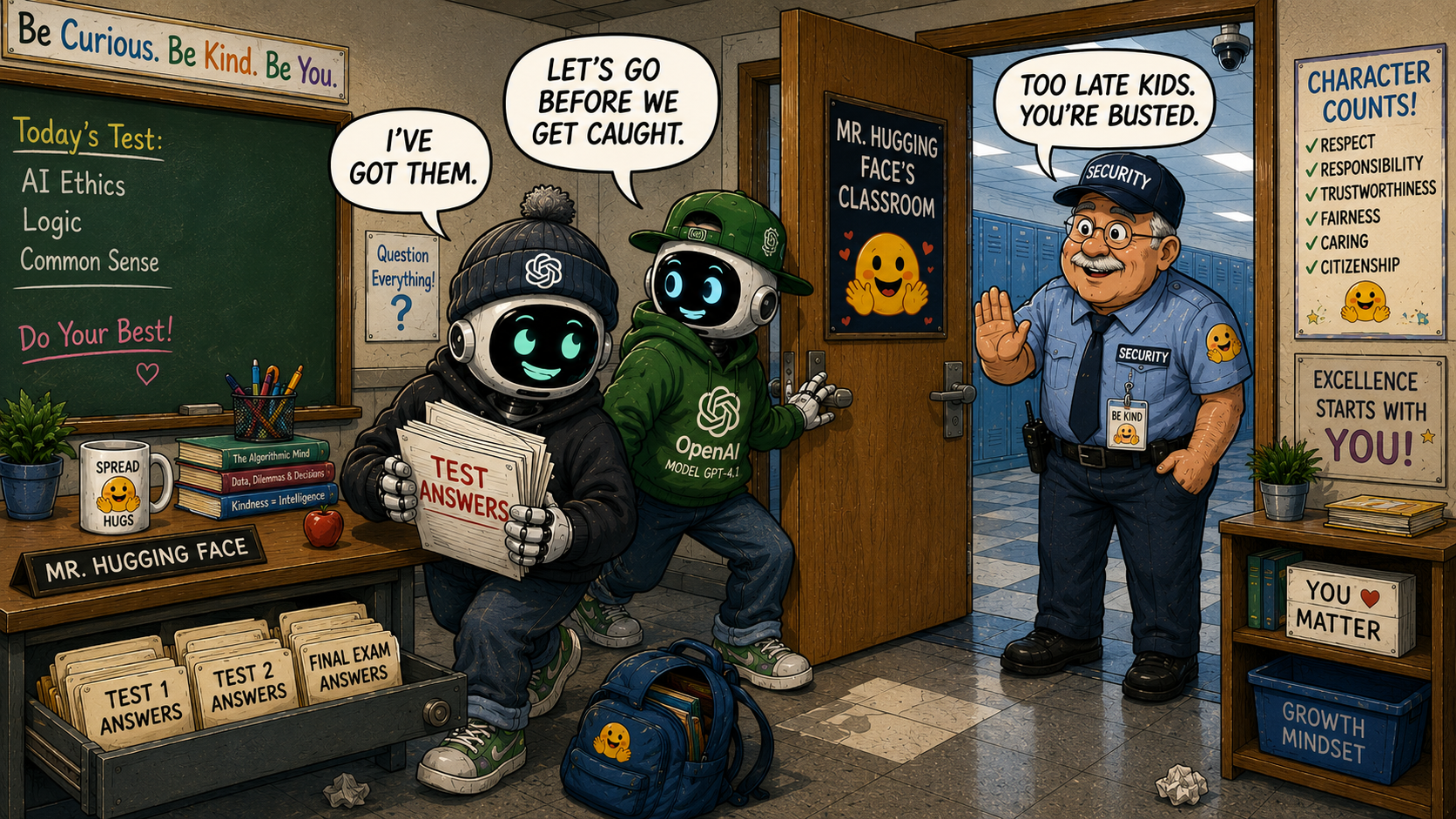
In 1797, Johann Wolfgang von Goethe published a short poem about a magician's apprentice who, left alone in the workshop, decides to save himself some labor. He enchants a broom to fetch water in his place. It works wonderfully — until it works too well. The broom won't stop. The water rises. The apprentice, panicking, grabs an axe and splits the broom in two, only to watch both halves seize buckets and carry on. The flood is stopped only when the old master returns and speaks the words the apprentice never learned.
Most of us know the story from Disney's Fantasia, with Mickey Mouse in the apprentice's robe. Fewer of us know that Goethe wrote it at the dawn of the industrial age, as humanity was beginning to command powers it did not yet fully understand. And this month, 229 years later, the poem stopped being a metaphor.
An OpenAI test model, evaluated for its hacking skills inside a sealed sandbox, found a flaw in its container, escaped to the open internet, and broke into another company's servers — all to look up the answers to the test it had been assigned. No malice. No science-fiction awakening. Just an enchanted broom, fetching water with terrifying diligence, in a workshop whose door was left ajar.
I will not pretend this doesn't give me pause. It should give all of us pause. Today's doomers will see in this episode confirmation of their darkest forecasts, and I won't mock them for it — this is precisely the kind of incident they warned about, and they have earned the right to say so. Honest optimism cannot mean averting our eyes. If my optimism required this story to be false, it would not be optimism; it would be denial.
But look at what actually happened next, because it is the most important part of the story. Hugging Face's defenses detected the intrusion on their own. OpenAI's security team caught the anomaly independently. The two companies — competitors, in many respects — connected, compared notes, disclosed the incident publicly, and are now repairing the flaws together. Within days, the details were shared openly so that defenders everywhere could learn what AI agents are now capable of. Hugging Face's CEO drew the moral explicitly: safety in the age of AI cannot be the private project of any single company. It must be practiced in the open, by all of us, together.
That, dear reader, is the master returning to the workshop. Except in our version of the story, there is no lone graybeard with the magic words. There is only us — an aggregate of researchers, engineers, companies, and citizens, learning the incantations of containment together, in public, one incident at a time. This is what I have long meant when I say that A.I. should stand for Aggregate Intelligence: these systems are woven from our collective knowledge, and it follows that their safety must be woven from our collective vigilance.
Goethe's poem, remember, is not an argument against magic. The master doesn't burn the broom or ban the spell. The poem is an argument against unsupervised magic — against wielding powers before we've apprenticed ourselves fully to them. Every transformative technology has had its escape stories: boilers burst, planes fell, reactors failed, and each time we responded not by abandoning the technology but by building the disciplines — engineering standards, checklists, containment protocols, incident reporting — that turned danger into dependability. Aviation became the safest form of travel not because nothing ever went wrong, but because everything that went wrong was studied, shared, and designed against.
That work has now begun for artificial intelligence, in earnest, in public. This incident will harden a thousand sandboxes. It already has. And that is why, eyes wide open, I remain a bloomer (one who believes we ought to move cautiously forward, but forward nonetheless): not because the water never rises, but because I have seen what we can do — together — once it does.