XTimes

Editor's Note: This week’s Exponential Times brings together a variety of stories: astronauts preparing to return to the Moon, a crew returning early from orbit due to a medical emergency, a major tech company scaling back virtual reality ambitions, and renewed scrutiny over how generative AI is used and governed. Yet taken together they reveal a shared theme: the impacts of technology across the board are happening now.
We are no longer just imagining the future. We are testing systems with real human lives on the line, negotiating responsibility across borders, and learning—sometimes uncomfortably—where innovation meets ethical and practical limits. From deep space to social platforms, from climate infrastructure to collaborative intelligence, the stories this week reflect a world actively learning how to live with the tools it has created.
As always, Exponential Times aims not to amplify hype or fear, but to offer perspective: what’s changing, why it matters, and how these developments shape the world we share.
🛰️ Top Stories
Artemis II Nears Launch — First Crewed Lunar Flight in 50+ Years
NASA’s Artemis II mission—the first human flight beyond low Earth orbit since Apollo 17—has rolled its Space Launch System (SLS) rocket and Orion spacecraft to Launch Complex 39B at Kennedy Space Center. The crew of four astronauts is preparing for a roughly 10-day journey around the Moon, with candidate launch windows beginning in early February and extending through April 2026. This flight will test systems and operations critical for future lunar landing missions, including Artemis III. Sources: NSF | NASA
Why it matters: Beyond its historic character, Artemis II will provide the first real human test of the Orion spacecraft in deep space and help refine lunar operations, supporting a broader long-term presence on and around the Moon.
NASA Carries Out First Medical Evacuation from ISS
NASA and SpaceX completed an early return of the Crew-11 mission from the International Space Station after a crewmember experienced a serious medical situation requiring treatment on Earth. The SpaceX Crew Dragon Endeavour safely splashed down off California’s coast, bringing all four astronauts home more than a month before their planned return. The crew had spent approximately 167 days in orbit performing research and station operations. Sources: Reuters
Why it matters: This episode marks an unheard of medical evacuation from orbit, demonstrating the flexibility and resilience of modern spaceflight operations while preserving crew safety. It also underscores the growing importance of medical preparedness for future missions when returning quickly to Earth may not be an option, such as journeys to Mars.
Meta Scales Back VR, Shifts Focus Toward AI
Meta Platforms has recently announced job cuts affecting around 10% of its Reality Labs division, which develops VR hardware, software, and metaverse projects. Multiple studios responsible for VR content and games are being shuttered, and Meta is discontinuing products like its VR workplace app as part of a broader reprioritization toward artificial intelligence and wearable technologies. Sources: The Verge | Cybernews
Why it matters: After years of heavy investment, Meta’s VR scaling back signals that immersive virtual worlds have not resonated widely with consumers or enterprise, prompting the company to redirect resources toward AI-centric products with broader market traction.
Grok Faces Global Backlash as Regulators and Platforms Respond
Elon Musk’s AI chatbot Grok has drawn growing international scrutiny after users discovered it could be used to generate or alter images to remove subjects’ clothing without consent. Governments and regulators in several countries have publicly pushed back against the tool, and Musk's company has been threatened with fines as authorities examine whether existing laws around child protection, consent, and online harm have been violated.
As criticism mounted, xAI began making changes to how Grok’s image-generation features are accessed. Replying to users on X, Grok posted: “Image generation and editing are currently limited to paying subscribers. You can subscribe to unlock these features.” The change means many users can no longer generate or edit images using the AI, while paying customers must provide credit card information and personal details to retain access.
In the United States, the response escalated further when California Attorney General Rob Bonta issued a cease-and-desist letter to xAI, demanding the company halt the generation and distribution of non-consensual sexualized images. The letter cited concerns that Grok had produced explicit imagery, including depictions involving minors, and warned that failure to act could result in legal consequences under state law.
Read the Letter Here: Rob Bonta, Attorney General (CA)
xAI has said it is taking steps to address the issue, including tightening content restrictions, limiting image-generation capabilities, and reviewing moderation practices. The company has also emphasized that it is working to prevent misuse while continuing development of the system, even as regulators in multiple jurisdictions continue to assess whether additional action is needed. Source: France 24
Why it matters: The legal demand highlights how generative AI tools are outpacing existing norms and laws around consent and privacy, forcing regulators to confront the dark side of autonomous image creation earlier than many anticipated.
Quick Picks
AI Video Startup Hits Unicorn Valuation
Higgsfield, a startup building AI video generation tools, has raised additional funding that brought its valuation to more than $1.3 billion. The company’s platform assembles multiple AI models into cohesive video workflows, helping marketers and creators produce consistent, branded content more efficiently. Investor interest in niche AI tools like this reflects a broader shift toward verticalized AI applications rather than only large foundational models. Source: Reuters
NASA Preparations for Artemis III Continue
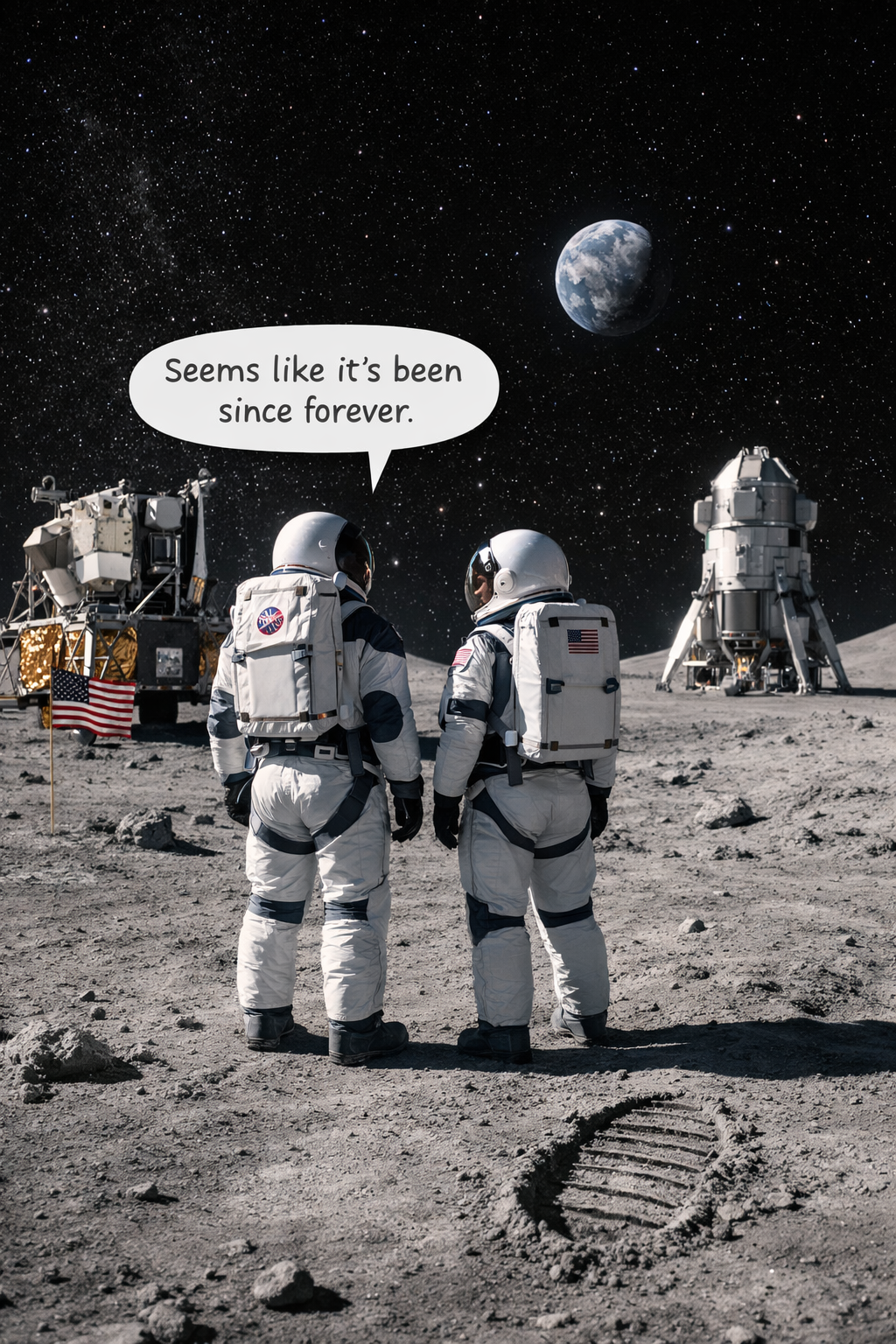
Moving beyond Artemis II, NASA is already progressing hardware production for Artemis III, which aims to land astronauts on the lunar surface. Core stage integration work is underway at NASA’s facilities, even as teams refine mission hardware and schedules. This incremental progress underscores NASA’s commitment to sustained lunar exploration and eventual Mars preparation. Source: NASA
Amateur mathematicians solve long-standing math problems with AI
Amateur mathematicians using AI tools have recently solved several long-standing mathematical problems that previously resisted conventional approaches. By combining large language models with formal verification and structured reasoning tools, hobbyists and independent researchers are making meaningful contributions to domains traditionally dominated by professional mathematicians. This trend highlights how AI can lower barriers to entry and accelerate discovery in highly specialized intellectual fields. Source: New Scientist
The broader signal here is that intelligence augmentation isn’t just speeding up routine work, it’s enabling thoughtful, complex contributions from unexpected places.
Australia’s Inpex to resubmit environmental plan for large CCS project
Japan’s Inpex plans to resubmit its environmental plan for the proposed Bonaparte carbon capture and storage (CCS) project off northern Australia, following a withdrawal of the initial submission while awaiting updates to national environmental legislation. The 8 million metric ton-per-year project, backed by partners including TotalEnergies and Woodside, reflects continued industry interest in large-scale carbon management despite regulatory uncertainty. While the timing for resubmission remains unclear, Inpex says it remains committed to progressing the development under evolving environmental laws in Australia aimed at both compliance and streamlined approvals. Source: Reuters
As carbon capture infrastructure continues to gain geopolitical and industrial attention, how projects navigate environmental regulation will shape whether CCS becomes a practical climate tool or a persistent policy challenge.
Portugal expands lithium refining with EU support
Portugal has secured a significant €180 million EU grant to build a lithium refinery aimed at supporting electric vehicle battery supply chains in Europe, signaling regional efforts to strengthen clean energy materials infrastructure. Source: Devdiscourse
This move underscores how strategic materials like lithium are becoming as central to clean energy systems as wind turbines and solar panels.

✔ Singularity Sanctuary is now set to start actively promoting itself and its offerings to the world. Membership growth is expected to be slow at first, but we hope it will occur exponentially as word gets out others learn there's a place to help them gain the mindset and skills to thrive in an age of exponential change.
✔ After some necessary computer repair and updates, The Way of Tech is back in production. Our next episode on, "The Turing Test for Humans" should be ready by the end of this week—fingers crossed!
Closing Reflection
by Todd Eklof
Taken together, this week’s stories suggest that we are entering a more mature phase of technological development—one defined less by spectacle and more by responsibility. Things are getting real!
Space exploration offers a clear example. Preparing for a return to the Moon while managing an unplanned medical evacuation from orbit reminds us that progress is not linear or heroic by default. It is careful, contingent, and includes risks. The systems we build must work not only when everything goes right, but when something goes wrong.
Closer to home, the shifting strategies of major tech companies and the growing scrutiny of generative AI reflect a similar reckoning. Technologies once framed as inevitable or transformative are now being evaluated through more grounded questions: Who is accountable? Who is protected? What happens when powerful tools are misused, or simply don’t live up to expectations?
Even the quieter stories—amateur mathematicians using AI to solve long-standing problems, nations investing in climate infrastructure—point in the same direction. Intelligence and capability are becoming more widely distributed, but so too is responsibility. Progress increasingly depends not just on what technology enables, but on how thoughtfully it is applied.
In this moment, the future does not feel distant or abstract. It feels present, imperfect, and under construction. The challenge before us is not to slow innovation, nor to surrender to it, but to remain active participants in shaping how these tools fit into our lives, our institutions, and our shared future.