XTimes
Editor's Note: Diverse Signals in Tech, Medicine, and Society
This week’s Exponential Times explores horizons as varied as neural interfaces and national tech policy. We glimpse tomorrow’s brain–machine possibilities, the power of AI in scientific discovery, generational debates over smartphones and social media, and corporate bets on autonomous digital labor. These signals come from different domains, but together they show how technology is shaping human capability, conditions of growth, and the spaces where our values and tools intersect.
Top Stories
Breakthrough Minimally Invasive Brain–Computer Interface
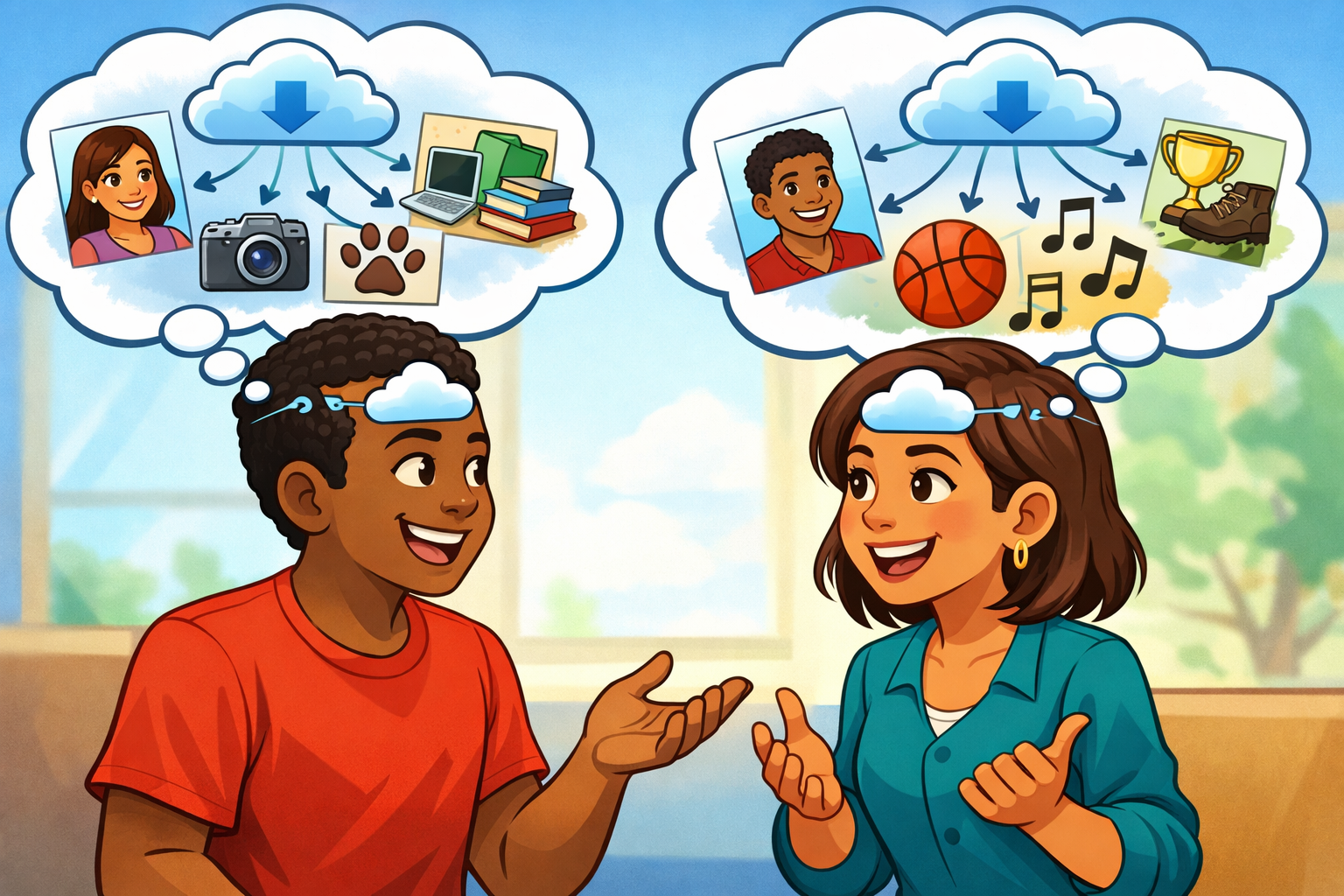
Researchers have unveiled a new minimally invasive brain–computer interface (BCI) that may bridge the gap between high-performance neural harnessing and clinical safety. Unlike prior systems requiring open-skull surgery, this new design uses a small implant placed beneath the skull that can read brain activity with high resolution while lowering surgical risk. Early results suggest the interface could enable more reliable communication between the brain and external devices, with implications for paralysis therapy, sensory restoration, and cognitive augmentation. Source: Psychology Today
Why it matters: Neural interfaces have long promised to redefine what’s possible in medicine and human-machine synergy, but safety and risk have slowed real-world deployment. A minimally invasive BCI that balances fidelity with safety accelerates the timeline for assistive neurotechnology while inviting careful ethical conversation about augmentation, consent, and access.
AI Empowers Student to Discover Impressive Number of New Space Objects
A young student used artificial intelligence to discover more than a million previously uncatalogued space objects by applying machine learning to archived telescope data. His work, recognized with a major science prize and a $250,000 award, dramatically expanded the known catalog of objects in the solar system’s vicinity by sifting patterns that traditional algorithms overlooked.
Source: SciTechDaily
Why it matters: This story highlights how access to open scientific data and AI tools can democratize discovery. What was once possible only for well-funded observatories is now within reach of a determined individual with a laptop and the right models—a microcosm of how intelligence amplification can reshape research frontiers.
Australia Enacts Social Media Age Restriction
Australia has taken an unprecedented regulatory step by banning social media use for users under sixteen years old. The new law requires major platforms to prevent accounts below this age threshold, a move framed as a public-health intervention to curb youth exposure to harmful online dynamics. The measure has ignited robust debate about childhood development, digital citizenship, and the responsibilities of platforms and states.
Source: NPR
Why it matters: This policy sets an influential precedent for other democracies grappling with youth online safety. It raises essential questions about balancing protection, autonomy, and digital literacy in an era where social and emotional development are intertwined with ubiquitous connectivity.
Smartphones, Age, and Adolescent Well-Being
A growing body of research suggests that delaying personal smartphone ownership until age thirteen—rather than age twelve—correlates with improved psychosocial outcomes, including reduced anxiety, better sleep patterns, and lower attention difficulties. While causality is complex, these findings add to a broader conversation about how screen exposure intersects with key developmental stages.
Source: Children's Hospital of Philadelphia
Why it matters: As technology becomes inseparable from daily life, understanding when and how exposure influences developmental trajectories is crucial for families, educators, and policymakers. This research doesn’t prescribe rigid thresholds but invites reflection on intentional timing and design of digital participation.
Meta Bets Big on Autonomous AI Agents
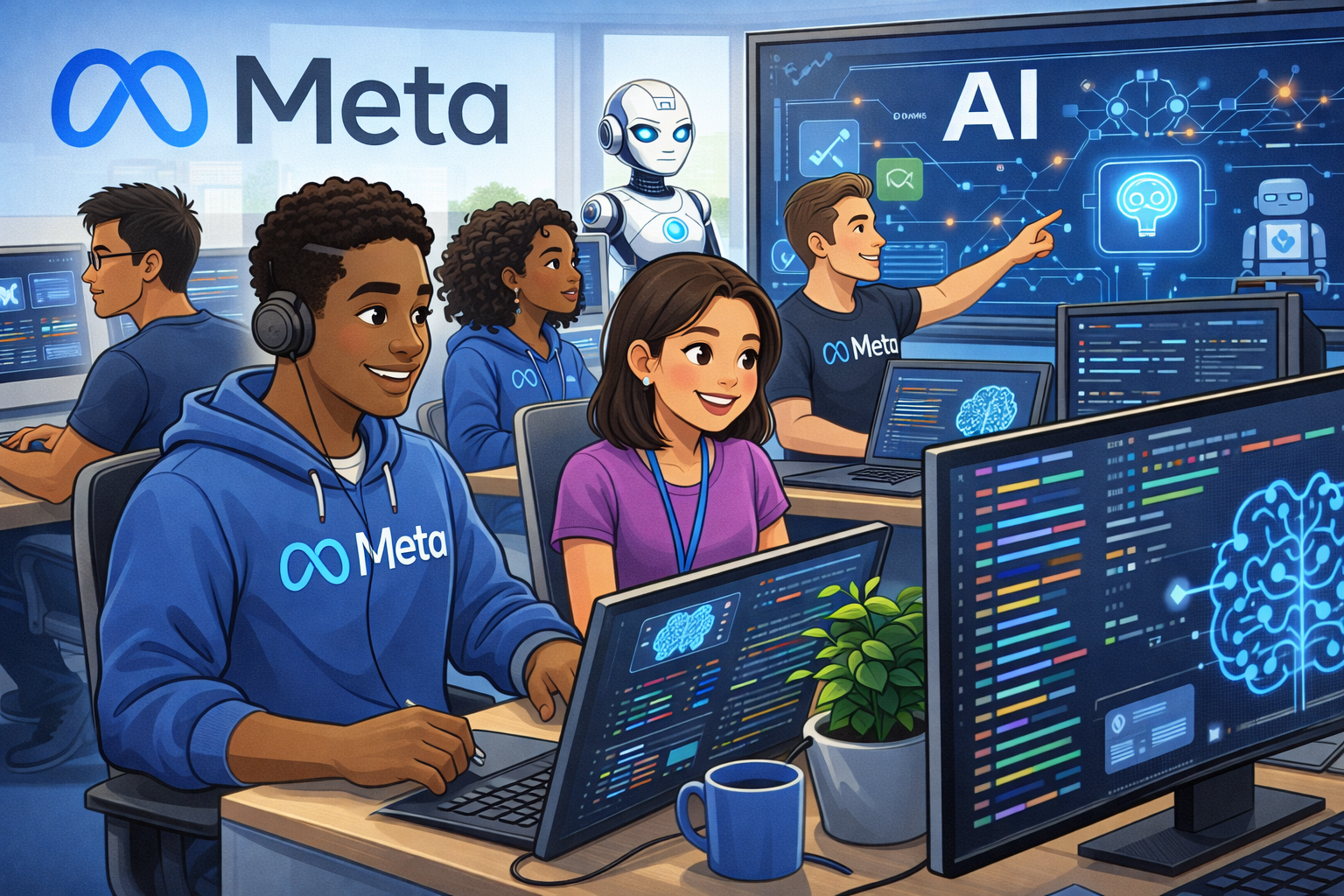
Meta Platforms announced an approximately $2 billion acquisition of AI agent developer Manus—a startup specializing in systems that can act autonomously to perform tasks ranging from writing to data analysis. Meta plans to integrate these capabilities into its broader suite of AI tools, signaling a shift toward “AI employees” that operate with degrees of independence rather than simple prompts.
Source: Wall Street Journal
"Manus is an autonomous artificial intelligence agent developed by the same startup that created Monica, headquartered in Singapore. The agent is designed to independently carry out complex real-world tasks without direct or continuous human guidance." —Wikipedia
Why it matters: The rise of AI agents transforms how organizations think about labor, workflows, and responsibility. As digital agents take on structured tasks, the nature of human work shifts toward oversight, value judgment, and context—a dynamic that raises both opportunity and ethical question.
🔹 Quick Picks
China tops green energy report card
China once again ranked at the top of global clean-energy deployment metrics, driven by massive investments in solar, wind, battery storage, and grid modernization. The country now installs more renewable capacity annually than the rest of the world combined, while simultaneously accelerating electrification across transportation and industry.
Although China remains a major emitter overall, the pace and scale of its clean-energy build-out are reshaping global energy markets and underscores how climate image is increasingly based determined less by rhetoric and more by infrastructure choices made at national scale. Sources: International Energy Agency | Reuters
AI continues reshaping workplace roles
Across industries, companies are embedding AI systems directly into everyday workflows, from research and analysis to customer service and internal operations. Rather than replacing entire roles, many organizations are redesigning jobs around human-AI collaboration, where software handles routine cognitive tasks and humans focus on judgment, context, and relationship-based work. This shift is being driven as much by productivity pressure as by a shortage of skilled labor.
The nature of work is evolving less through sudden displacement and more through quiet redefinition of what it means to contribute value. Source: McKinsey Global Institute
Ethics boards accelerate work on neural technologies
As brain–computer interfaces and neuro-prosthetics advance, ethics committees and medical boards are moving faster to establish frameworks around consent, privacy, long-term monitoring, and cognitive autonomy. These discussions increasingly focus on how neural data should be protected and who retains agency when devices interact directly with the brain. The goal is to ensure that therapeutic promise is not undermined by ethical ambiguity.
The pace of governance here suggests a recognition that neural technologies touch identity itself, not just health outcomes. Source: National Library of Medicine | National Institutes of Health
Universities expand AI and governance curricula
Universities worldwide are rapidly expanding programs focused on artificial intelligence, ethics, and governance, responding to demand for professionals who understand both technical systems and their societal consequences. New courses emphasize responsible deployment, interpretability, and policy literacy alongside machine learning fundamentals. This marks a shift away from treating ethics as an add-on toward embedding it directly into technical education.
How future technologists are trained may prove as influential as the technologies they build. Source: The Chronicle of Higher Education
Media literacy gains momentum in youth education
Several countries and school systems are integrating media literacy and digital reasoning into core curricula, teaching students how algorithms shape attention, information flow, and perception. Rather than focusing solely on restriction, these programs aim to cultivate discernment, critical thinking, and self-regulation in digital environments. The approach reflects growing recognition that resilience requires understanding systems, not just avoiding them.
Long-term digital well-being may depend as much on education as on regulation. Source: UNESCO

🌀 Singularity Sanctuary Update
✔ Singularity Sanctuary ushered in the start of the New Year by holding its first Singularity Circle. The online gathering included AI generated music tailored specifically for those interested in the Singularity, as well a brief reflection about contending with today's disruption while staying positive about the future. There was also plenty of time for attendees to share their thoughts and converse with one another. Our next Circle will occur on Saturday, February 7, 2026 at 10:00 AM Pacific. A Zoom link will be sent to members in advance.
Closing Reflection: Thinking Like a Human in the Exponential Age
The signals in this issue—from neural breakthroughs to social thresholds—remind us that technology’s most profound impact isn’t just what it makes possible, but how it reshapes the conditions under which we live, learn, and grow.
We often talk about “advances” in terms of performance metrics or headline milestones. But the real transformation happens when these technologies intersect with the human experience; When an interface meets a mind. When a teenager’s curiosity wrests secrets from the sky. When a society questions how young a child should be “digital first.” When autonomous systems become collaborators rather than tools.
These are not just technological signals; they are judgments about what matters most to us, made visible through data, policy, and the stories we choose to tell ourselves about them.
As we move into a year where the pace of change feels more exhilarating and disorienting that the past year, it’s worth pausing to remind ourselves:
Technology accelerates what we train it to accelerate. But the direction of acceleration is still ours to choose.
That’s both the challenge and the invitation of exponential times.
[IF YOU ENJOY AND BENEFIT FROM OUR WEEKLY PUBLICATION OF XTIMES, PLEASE SHARE IT WITH OTHERS YOU THINK MIGHT ALSO BE INTERESTED.]