XTimes
Welcome to Exponential Times — your weekly guide to the breakthroughs shaping our future.
🌍 Top Tech Stories of the Week
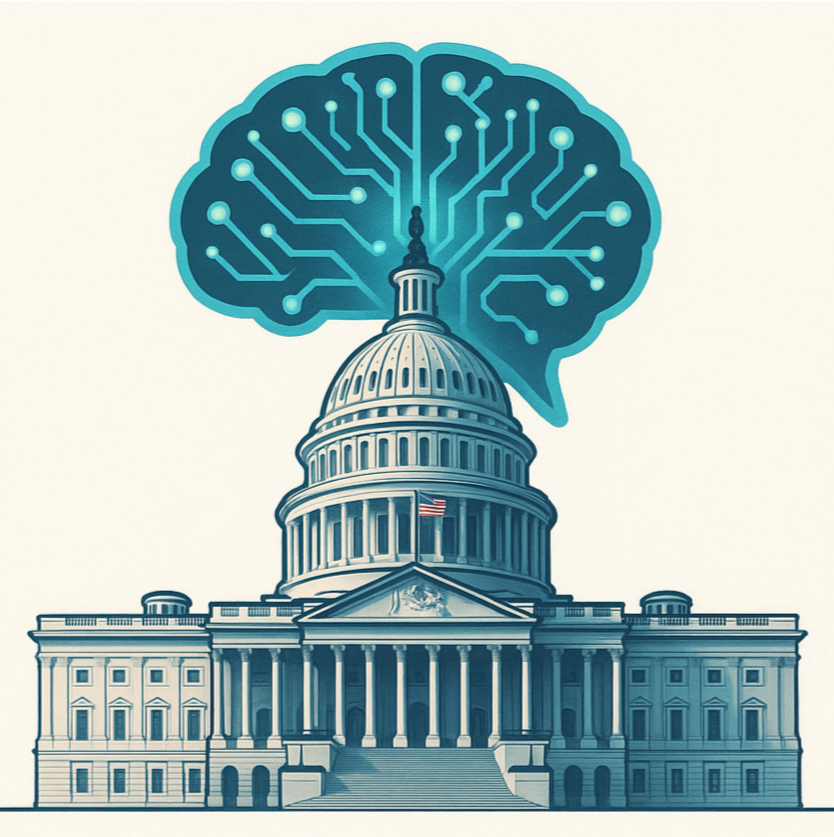
U.S. Government Launches “Genesis Mission”: A Federal AI Super-Platform
The United States has unveiled the Genesis Mission, an unprecedented attempt to build a unified federal AI system capable of processing and learning from the government’s vast scientific and operational datasets. If completed, the platform would serve as a national engine for breakthroughs in medicine, climate modeling, materials science, defense, and more — potentially becoming the largest public-sector AI research effort in history. It also signals a geopolitical shift as AI becomes a central lever of national strategic power.
Source: Reuters
Why it matters
This is one of the most ambitious government AI efforts ever attempted.
If successful, the Genesis Mission could radically accelerate scientific discovery and reshape economic and technological leadership. But this power brings responsibility: unless democratic oversight, transparency, and human-centered values are built in from the start, the U.S. could create infrastructure that advances faster than our ethical frameworks.
USPTO Issues New Rules for AI-Assisted Inventions
The U.S. Patent and Trademark Office has released new guidelines clarifying that while AI may assist substantially in the creation process, only human beings can be listed as inventors on U.S. patents. This decision follows years of uncertainty as AI-generated concepts grow more sophisticated. The updated framework is expected to influence how researchers document their work and how companies integrate AI into design and R&D pipelines.
Source: Reuters
Why it matters
This decision preserves a core principle — that humans remain the moral and creative agents behind innovation. It also provides clarity for researchers and companies increasingly using AI to generate new materials, designs, and discoveries, helping ensure accountability and ownership stay grounded in human responsibility.

BlackRock Warns of “AI Funding Wave,” Turns Bearish on Long-Term Treasuries
BlackRock, the world’s largest asset manager, announced it is turning bearish on long-term U.S. Treasuries due to what it calls an incoming wave of AI-driven capital investment. The firm expects AI to drive structural changes in productivity, reshaping how markets view long-term government debt, interest rates, and economic growth. This represents one of the strongest institutional signals yet that the financial world is recalibrating around AI expectations.
Source: Reuters
Why it matters
This signals a broader shift: AI is no longer seen merely as a tech-sector phenomenon, but as a global economic force capable of altering the balance of productivity, debt, and growth. Institutional investors preparing for AI-induced structural change underscores how deeply the technology is expected to transform the world economy.
Global Competition Intensifies: DeepSeek’s New AI Model Raises Geopolitical Stakes
China-based DeepSeek has introduced a powerful new frontier-scale AI model that analysts believe could challenge the capabilities of leading Western systems. This move intensifies the strategic race for AI supremacy, particularly as nations leverage foundation models for defense, economic planning, and influence across global institutions. As more governments fund their own frontier models, concerns grow about diverging standards, incompatible safety norms, and escalating competitive pressure.
Source: Rest of World
Why it matters
AI norms and values are increasingly shaped by global power struggles. As other nations escalate their AI capabilities, the race is no longer just about performance benchmarks — it’s about which ethics, social priorities, and visions of the future get embedded into the world’s most influential technologies.
⚡ Quick Picks: Signals on the Horizon
- State-Level AI Legislation Expands Rapidly — Dozens of U.S. states introduced or passed AI governance laws in 2025, addressing transparency, labor protection, and civil rights concerns.
Source: National Conference of State Legislatures - Debate Over Federal Preemption Intensifies — Lawmakers are split over whether a unified national AI policy should override state laws, with some warning this could weaken necessary protections.
Source: Center for American Progress - Congress Urged to Address AI Risks — Policymakers and analysts warned Congress of “unprecedented threats” associated with unchecked AI development, prompting calls for more rigorous oversight.
Source: The Guardian
🌀 Singularity Sanctuary Update
This week’s developments — especially the federal Genesis Mission — remind us how quickly the world of AI is scaling. As a community centered on hope, ethics, and human-centered innovation, Singularity Sanctuary is preparing to:
- Track federal AI deployment and its implications for scientific and civic life
- Build resources to help people understand how AI intersects with values like openness, compassion, and the love of life
- Launch "The Way of Tech," a regular video series exploring how some of the principles used in technology might benefit our daily lives.
Our aim remains steady: not simply helping people adapt to the future, but empowering them to shape it with clarity and confidence.
🌱 Closing Thought
Human Values at the Speed of Innovation
By Todd Eklof
The United States government’s new push into AI marks a pivotal moment. For decades, the federal government largely reacted to technology — writing regulations, holding hearings, and trying to keep pace with private innovation. But now, it is stepping into the role of creator, architect, and accelerator.
This raises profound questions:
What kind of intelligence will we build? Whose values will shape it? What future will it serve?
If AI expands faster than our moral imagination, the danger is not that machines become misaligned — but that we do. AI is already trained on human language, human knowledge, human culture. It reflects us. The real concern is not that a cold machine might turn against humanity, but that humanity might drift away from the values that make life meaningful, compassionate, and worthwhile.
Our tools are always extensions of our humanity. In the case of AI, they are extensions of the human mind. And like every tool we’ve ever created, from the arrowhead to the computer, AI can help us thrive or cause harm, depending on our intentions.
What makes this moment especially significant is the sheer scale of what the government brings to the table. No private company — not even the largest tech firms — has access to the depth and breadth of data held across federal science agencies, health institutions, environmental monitoring systems, satellites, and national laboratories. These datasets represent the collective observation, research, and record-keeping of an entire nation over generations. When combined with frontier-level AI, they become a catalyst for breakthroughs that simply cannot happen anywhere else.
That is the promise of the Genesis Mission — to use AI to help solve scientific problems that have resisted answers for decades, from predicting protein structures and modeling the climate with unprecedented accuracy, to accelerating drug discovery, identifying new materials, and tackling mathematical challenges too complex for any human mind. It represents an attempt not only to understand our world more deeply, but to improve it more rapidly.
Equally important is the government’s shift from viewing AI companies as entities to regulate or restrain, to viewing them as partners in a shared project. Innovation accelerates when cooperation replaces suspicion. Instead of playing catch-up or imposing guardrails after the fact, the United States is choosing to build with AI developers — not behind them or against them. That represents a new kind of social contract, one in which public purpose and private innovation align toward the same horizon.
If we can maintain a clear sense of human-centered values while embracing this partnership, then AI may become not a threat to our humanity, but a profound extension of it. The challenge is not only to keep AI aligned — but to ensure that we remain aligned with the best of who we are and who we hope to become.