XTimes
Welcome to Exponential Times — your weekly guide to the breakthroughs shaping our future.
🌍 Top Tech Stories of the Week
Graphene Supercapacitors Rival Traditional Batteries
Researchers at Monash University in Australia have engineered a multiscale graphene architecture that enables supercapacitors to reach energy densities comparable to lead-acid batteries while still delivering ultra-fast recharge times. The breakthrough lies in unlocking more of the graphene’s surface area for energy storage, closing the gap between capacitors and traditional batteries. Source: SciTechDaily
Why it matters
When rapid charging meets high energy density, the effect cascades across industries — from electric vehicles and smart infrastructure to consumer tech. This could enable phones that charge in seconds, energy grids that balance instantly, and vehicles that refuel faster than a gasoline tank.
Breakthrough in Brain Rejuvenation: Scientists Reverse Memory Loss in Aging Mice
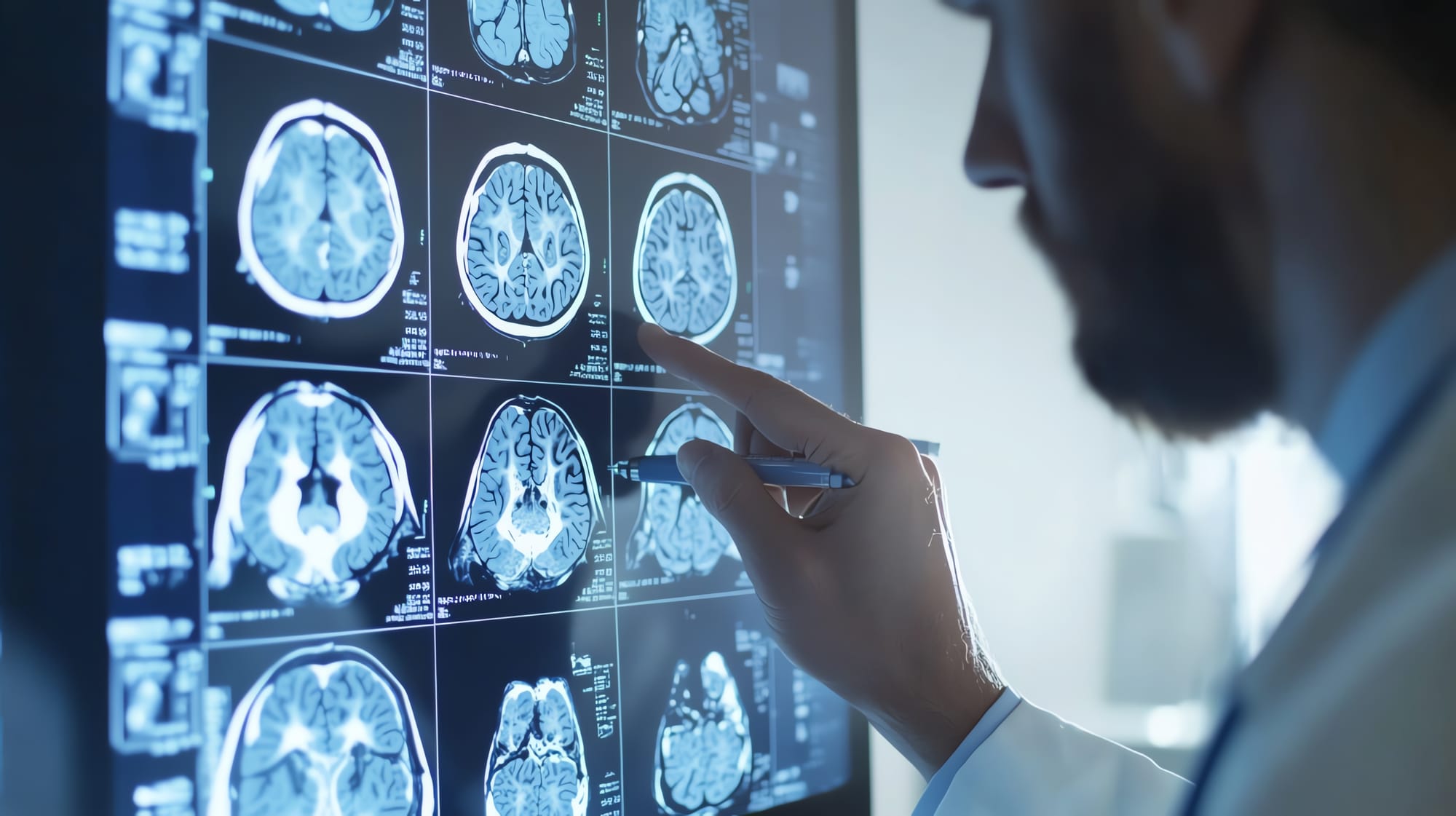
Researchers at Cedars-Sinai Medical Center have successfully reversed age-related memory decline in mice by using lab-grown immune cells derived from human stem cells. These “youthful” cells were infused into aging mice and those modeling Alzheimer's disease, leading to improvements in cognitive performance and neuronal health. The treatment appears to reduce brain inflammation — a key driver of cognitive decline — and stimulate cellular repair processes. Source: ScienceDaily
Why it matters
Rather than simply managing symptoms, this approach suggests it may be possible to regenerate the aging brain. In an era where humans are expected to live longer and adapt more rapidly to technological transformation, preserving mental agility may become as critical as the development of artificial intelligence itself. As exponential innovation accelerates, regenerative neuroscience could help humanity keep pace with its own creations.
Practical Quantum Supercomputer Alliance Formed
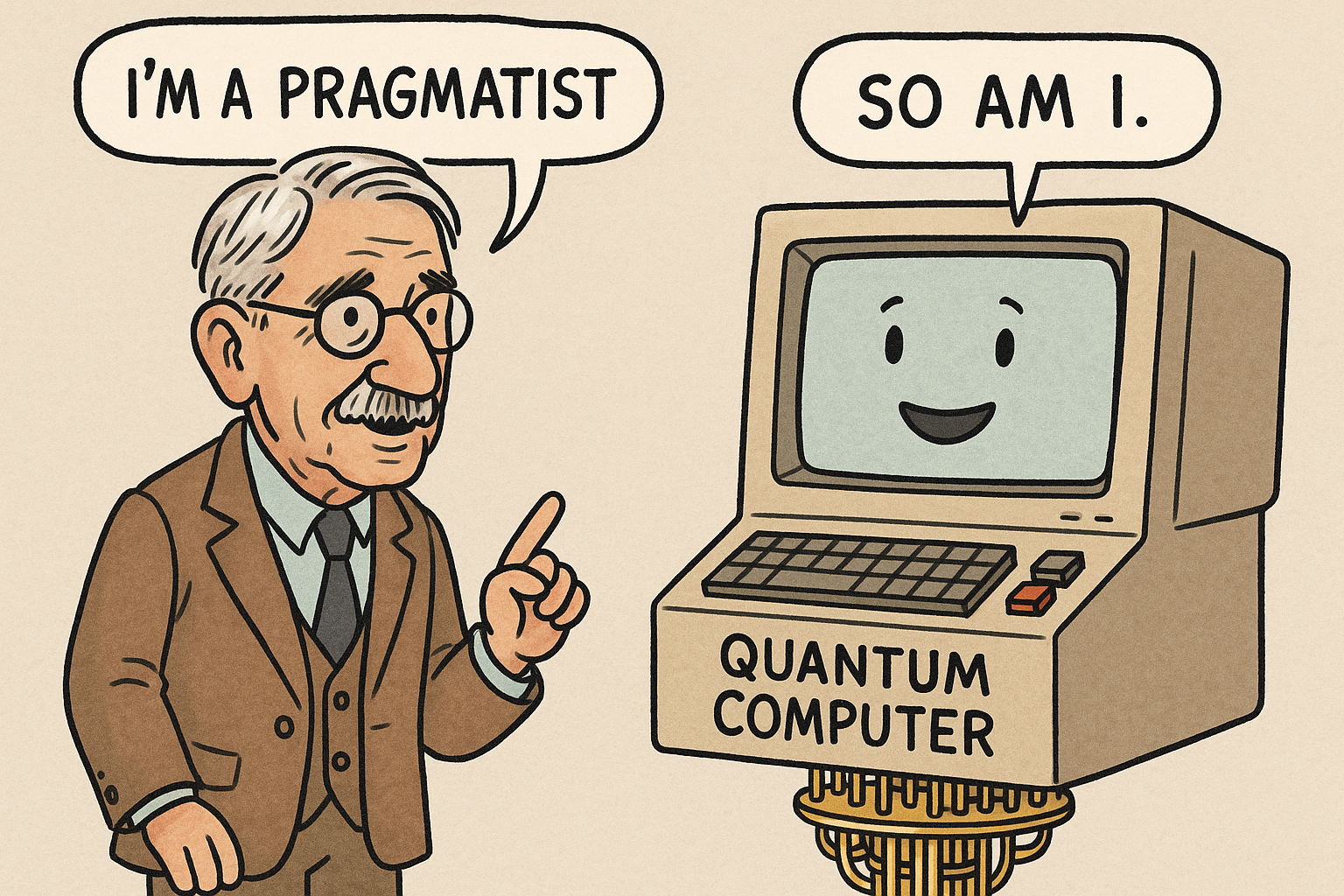
A new consortium led by Hewlett Packard Enterprise and Nobel laureate John M. Martinis aims to produce quantum computers using industry-standard chip manufacturing tools, moving away from bespoke lab systems toward scalable production models. Source: Reuters
Why it matters
The moment quantum hardware becomes mass-producible, entire sectors—from chemistry and materials science to AI optimization—gain access to computation beyond classical limits. This is how fundamental physics leaps into widespread utility.
Photonic Chip Achieves 38 Tbps Transmission
Researchers at Fudan University have demonstrated a silicon photonic multiplexer chip that uses light rather than electricity to transfer data, delivering speeds of 38 terabits per second on a single optical component. Source: Tom’s Hardware
Why it matters
Shifting from electrons to photons drastically reduces heat and latency, overcoming bottlenecks in AI training and cloud infrastructure. This could enable a new generation of ultra-efficient data centers and high-speed computation.
AI Browser “Atlas” Launches — Intelligent Web Interaction Arrives
OpenAI has reportedly introduced Atlas, an AI-enabled browser that integrates multi-step reasoning and autonomous task execution directly into the browsing experience. Rather than simply retrieving pages, Atlas assists with research, analysis, and decision-making — behaving more like a partner than a search tool. Source: Crescendo AI
Why it matters
We’re witnessing the beginning of agent-based interaction, where AI systems don’t just assist us but actively collaborate. This shift fundamentally changes how we relate to knowledge systems — and increases the urgency to guide their purpose.
⚡ Quick Picks: Signals on the Horizon
• AI evolves into 3D world builders – Fei-Fei Li’s World Labs releases Marble, a world model platform that generates persistent 3D environments from text, images, video, or spatial layouts, geared toward VR, robotics, and simulation engineering. Source: TechCrunch
• Trillion-parameter intelligence in your pocket – Reports suggest Apple may integrate Google’s Gemini model into Siri, signaling the era where personal devices quietly run ultra-scale AI. Source: Reuters
• Launch cadence as competitive advantage – SpaceX sets another annual launch record in Florida with a Starlink mission, showcasing rapid orbital deployment as a driver of geopolitical and commercial momentum. Source: Space.com
• AI governance by design – New proposals emerging from the AI Alliance (led by IBM & MIT) advocate embedding safety oversight directly into model architectures rather than applying policies post-deployment. Source: MIT Sloan Management Review (reflects ongoing governance research)
🌀 Singularity Sanctuary Update
Aligned with our core belief that innovation grows from tolerance and intellectual openness, we’re advancing:
- As a new startup, Singularity Sanctuary is a work in progress, yet our website is already rich with information and inspiration.
- After a few more finishing touches, we'll begin to officially seek and onboard members and then schedule our first monthly Singularity Circle.
- SPECIAL NOTE: As a technology-oriented community, Singularity Sanctuary is committed to demonstrating the benefits tech has to offer. Everything we offer, our website, music, videos, newsletters, and more are developed and produced in partnership with Artificial Intelligence.
Our aim remains the same: not merely helping people adapt to the future — but empowering them to shape it.
🌱 Closing Thought
Technology as an Extension of Our Humanity
By Todd Eklof

Perhaps it’s because our brains are naturally dualistic in their thinking that we tend to consider man and machine to be complete opposites. Humans are warm; machines are cold. Humans have feelings; machines are calculating. Humans are natural; machines are not. Beyond such dualistic thinking, however, there’s reason to believe our technologies, like all our tools, are an extension of our humanity. It could even be argued that making “tech,” which come from the Greek word meaning “to craft” or “fabricate,” is what it most means to be human. As futurist Ray Kurzweil says, “No other tool-using animal on Earth has demonstrated the ability to create and retain innovations in their use of tools.”
The purpose of our tools is always meant to extend our human abilities to better meet our human needs. As I often say, “Hammers have handles because humans have hands.” The atlatl, for example, invented during the stone age and one of the first tools ever fashioned, extends a hunter’s power to throw spears by providing him with an “extra” elbow. Yesterday’s calculators and computers and today’s AI programs are likewise an extension of human intelligence. AI is trained on human language and, increasingly, on human images, sounds, and other sources of human understanding. So, when AI responds to a prompt, its answers reflect a summary of human knowledge. Like the atlatl, AI is an extension of humanity, not alien to it. And, like the atlatl, it extends our intelligence in ways that would otherwise be beyond our reach.
Today’s AI experts and developers talk and worry a lot about keeping AI “aligned” with our human values, which presupposes it already is. This is so because it’s trained on human information and understanding. The real worry, rather, is that it might someday invent its own kind of language—as happens in the 2013 movie Her—then go off in its own direction, perhaps in a direction that’s contrary to human interests. Maybe. Yet there are already plenty of pessimists worrying about the future of AI, so I’ll remain one of the minority optimists who enjoys using this wonder to make my work—and my life—not just easier but far more productive and creative than was possible just a short time ago.
My point here is only to suggest that technology is not automatically inhuman, nor anymore unnatural than a bird’s nest or beaver’s dam. As destructive and dangerous as much of our technology becomes, this is seldom its purpose. Nuclear energy was first conceived to power our cities, not destroy them. Perhaps we should be concerned as much about keeping ourselves aligned with our human values as we are Artificial Intelligence. Maybe AI can help us with that. I hope so.