XTimes
Welcome to Exponential Times — your weekly guide to the breakthroughs shaping our future.
🌍 Top Tech Story of the Week
OpenAI launches GPT-5.1: Adaptive reasoning at scale
OpenAI has released GPT-5.1, in two flavors: Instant (fast, everyday use) and Thinking (slower, deeper reasoning). The “Thinking” model uses adaptive reasoning to decide when to spend more compute on complex problems, while Instant becomes the new default for quick, conversational tasks. The launch is also framed as a response to earlier criticism about tone and safety, with an emphasis on more grounded, instruction-following behavior. MarketingProfs
Why it matters
GPT-5.1 is another step toward AI that doesn’t just answer, but decides how hard to think. That’s a subtle but profound shift. As models learn to allocate their own “attention” and resources, we’re edging closer to systems that feel less like tools and more like collaborators — which makes our responsibility to steer their purpose all the more urgent.
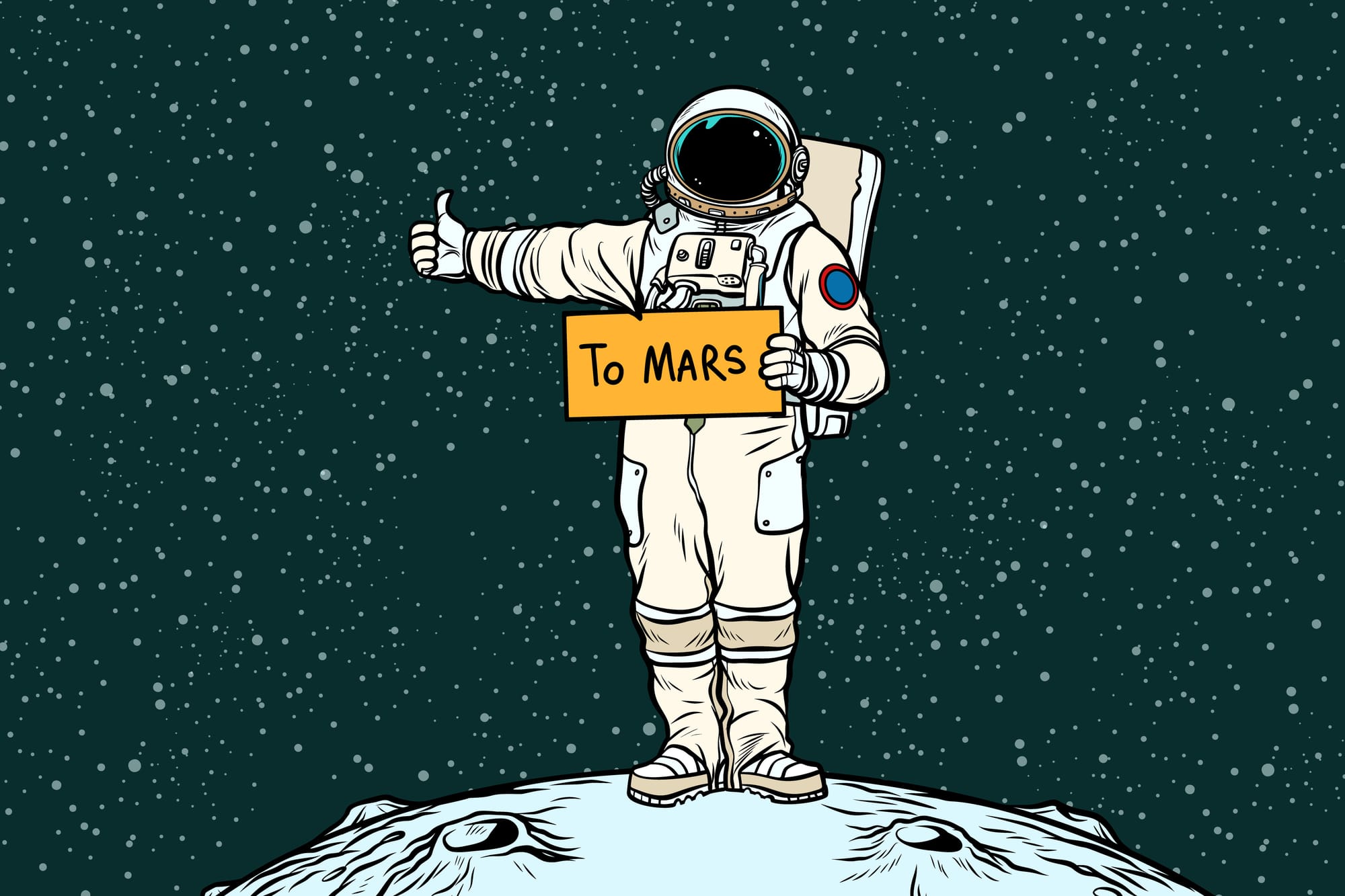
Blue Origin’s New Glenn nails launch and landing with NASA’s Mars mission
Jeff Bezos’s Blue Origin successfully launched its giant New Glenn rocket, deployed two NASA spacecraft for the Escapade mission to study Mars’ magnetic environment, and then landed the first-stage booster upright on its offshore barge Jacklyn. This marks New Glenn’s first fully successful recovery and a major milestone in reusability, following a partial success earlier this year. The Washington Post+1
Why it matters
Reusable heavy-lift rockets are the backbone of any serious multiplanetary future. With SpaceX’s Starship still in its test-heavy phase, New Glenn’s clean launch and landing show that we’re entering a multi-player era of large, reusable launch systems. Competition at this level doesn’t just lower costs — it accelerates the timeline to Mars, deep-space science, and, eventually, industrial activity beyond Earth.
Ice XXI: A strange new phase of water under extreme pressure
Using ultrafast, ultra-high-pressure experiments, scientists have observed a new phase of water dubbed Ice XXI. This exotic form appears at extreme pressures and temperatures, providing rare insight into how water behaves deep inside icy moons and exoplanets. ScienceDaily
Why it matters:
Finding a new phase of ice sounds esoteric, but it’s really about understanding the fabric of potentially life-bearing worlds. The behavior of water under extreme conditions influences planetary magnetic fields, internal oceans, and even the odds of habitable environments far from any star. In a way, Ice XXI is a reminder: the universe is still stranger — and more promising — than our models assume.
Biotech targets aging brains: Klotho Neurosciences honored for cell therapy innovation

Klotho Neurosciences has been recognized with a Cell Therapy Innovation of the Year award for its work on gene and cell therapies using a patented secreted form of the human Klotho (s-KL) gene. Their focus is on neurodegenerative and age-related diseases such as ALS, Alzheimer’s, and Parkinson’s — conditions that currently have few truly effective treatments. Stock Titan+1
Why it matters:
If the 20th century belonged to antibiotics and vaccines, the 21st may belong to cell and gene therapies that repair the brain itself. As we live longer lives amid accelerating tech change, therapies that preserve cognition are about more than individual health; they’re about societies that can carry wisdom forward rather than losing it to disease.
⚡ Quick Picks (Signals on the Horizon)
- World models for everyone: Fei-Fei Li’s World Labs launched Marble, a “world model” platform that turns text prompts, images, videos, or 3D layouts into persistent, editable 3D environments — aimed at gaming, VFX, VR, and robotics. A free tier hints at broad creative access. Radical Data Science
- AI on your phone, at trillion-parameter scale: Reports suggest Apple is partnering with Google to power Siri with Gemini, pushing massive models into the consumer device ecosystem and signaling a world where “trillion-parameter intelligence” quietly sits in your pocket. EdTech Change Journal
- Launch cadence as a form of power: SpaceX set a new annual launch record for Florida with another Starlink mission, underscoring how rapid, routine access to orbit is becoming a strategic advantage, not just a headline. KeepTrack
🌀 Singularity Sanctuary Update
With this first official issue of Exponential Times, Singularity Sanctuary now has its public signal: a weekly snapshot of where the curve of technology is bending — and how it intersects with our shared humanity.
In the background, we’re continuing work on:
- Getting our monthly Singularity Circle up and running
- Preparing to launch our weekly Singularity Sanctuary Podcast
- Letting the world know we're here and ready to welcome new members
Our aim is simple: make the future feel understandable, shapeable, and exciting.
🌱 Closing Thought
Iterative Deployment: A Model for Progress—In Tech and in Life
By Todd Eklof

Sudden, heavy rain can bring floods and landslides. But the same amount of rain distributed slowly over time brings growth, abundance, and beauty. Technology, especially exponential technology, behaves in much the same way. When advances arrive all at once they can overwhelm systems, institutions, and people. But when released gradually they become manageable, adaptable, and far more beneficial.
This is the logic behind a strategy that many tech companies now use, particularly AI companies: iterative deployment. In their excellent book Superagency: What Could Possibly Go Right with Our AI Future? (2025), Reid Hoffman and Greg Beato inform us that this is “the method OpenAI uses to bring its products into the world.” Instead of opening the floodgates and hoping for the best, the company releases its technology in phases, adjusting course as new information emerges.
This may sound surprising given how dramatically AI has burst into our lives. OpenAI released ChatGPT on November 30, 2022—three years ago. By the end of January 2023, just two months later, it had surpassed 100 million users! By any common-sense metric, it felt like a flood. Yet it did not become a disaster.
The reason is the cadence of iteration: GPT-3.5, GPT-4, GPT-4o, GPT-5, GPT-5.1—and more to come. Each step introduced new capabilities but also new safety systems, new constraints, new insights, and a torrent of user feedback. “One reason iterative deployment makes so much sense in the case of pioneering technologies like AI is that it favors flexibility over some Grand Master plan,” Superagency says. “It makes it easier to change pace, direction, and even strategy when new evidence signals the need for that.”
A Strategy Not Just for Technology—But for Us
Humans evolve at a far slower pace than our tools do. Yet iterative deployment is just as powerful as a strategy for our own personal lives.
First, it gives us permission to move forward step by step. Too often our ambitions feel so large that we never begin the “journey of a thousand miles.” But one step—enrolling in a class, filing paperwork to start a business, practicing a new skill, walking a little further each day—shrinks the overwhelming into the achievable. Small steps accumulate into meaningful progress. Each iteration becomes evidence that we are indeed moving toward something that once felt out of reach.
Second, iteration allows for reevaluation. Where are we right now? Is our strategy working? Do our goals need adjusting? Do we need adjusting? Just as AI models learn by cycling through feedback, our own lives improve when we pause regularly, assess honestly, and adjust deliberately.
The Human Version of a Tech Strategy
Iterative deployment is, at its heart, a philosophy of becoming.
Not perfection.
Not completion.
Just steady, mindful, adaptive progress.
If exponential technology must move carefully to avoid overwhelming the world, perhaps we should grant ourselves the same grace. The future belongs to those who take the next step, listen to the results, and step forward again—learning as they go.