XTimes
Editors Note: AI Is Changing Medicine, and the Words We Use
This week’s stories point to a quiet but profound shift. AI is earning regulatory trust in medicine, being adopted across generations, evolving toward energy-efficient designs inspired by human biology, and even influencing the language we use. At the same time, debates about creativity remind us that technology has always been part of how humans express meaning. Together, these developments suggest we’re entering a more mature phase of the exponential age—one where intelligence, technology, and humanity are becoming less separate, not more.
📌 Top Stories
AI MASH Approved by the FDA
The U.S. Food and Drug Administration has officially qualified its first AI-powered drug development tool, AIM-NASH, designed to assist clinical trials for metabolic dysfunction-associated steatohepatitis (MASH). The system analyzes liver biopsy images and provides standardized scoring to support pathologists and researchers, potentially accelerating the development of treatments for a serious and growing disease.
⭐ Why It Matters: Institutional Trust Is Crossing a Threshold
This isn’t just another AI pilot—it’s regulatory endorsement. When the FDA formally qualifies an AI system, it signals a shift from experimentation to integration. AI is no longer merely assisting around the edges of medicine; it is becoming part of the trusted infrastructure that moves therapies from lab to patient. That marks a psychological and institutional turning point in how society relates to machine intelligence.
Source:
FDA — https://www.fda.gov/drugs/drug-safety-and-availability/fda-qualifies-first-ai-drug-development-tool-will-be-used-mash-clinical-trials
Adults Over 50 Are Becoming the Fastest Adopters of Technology
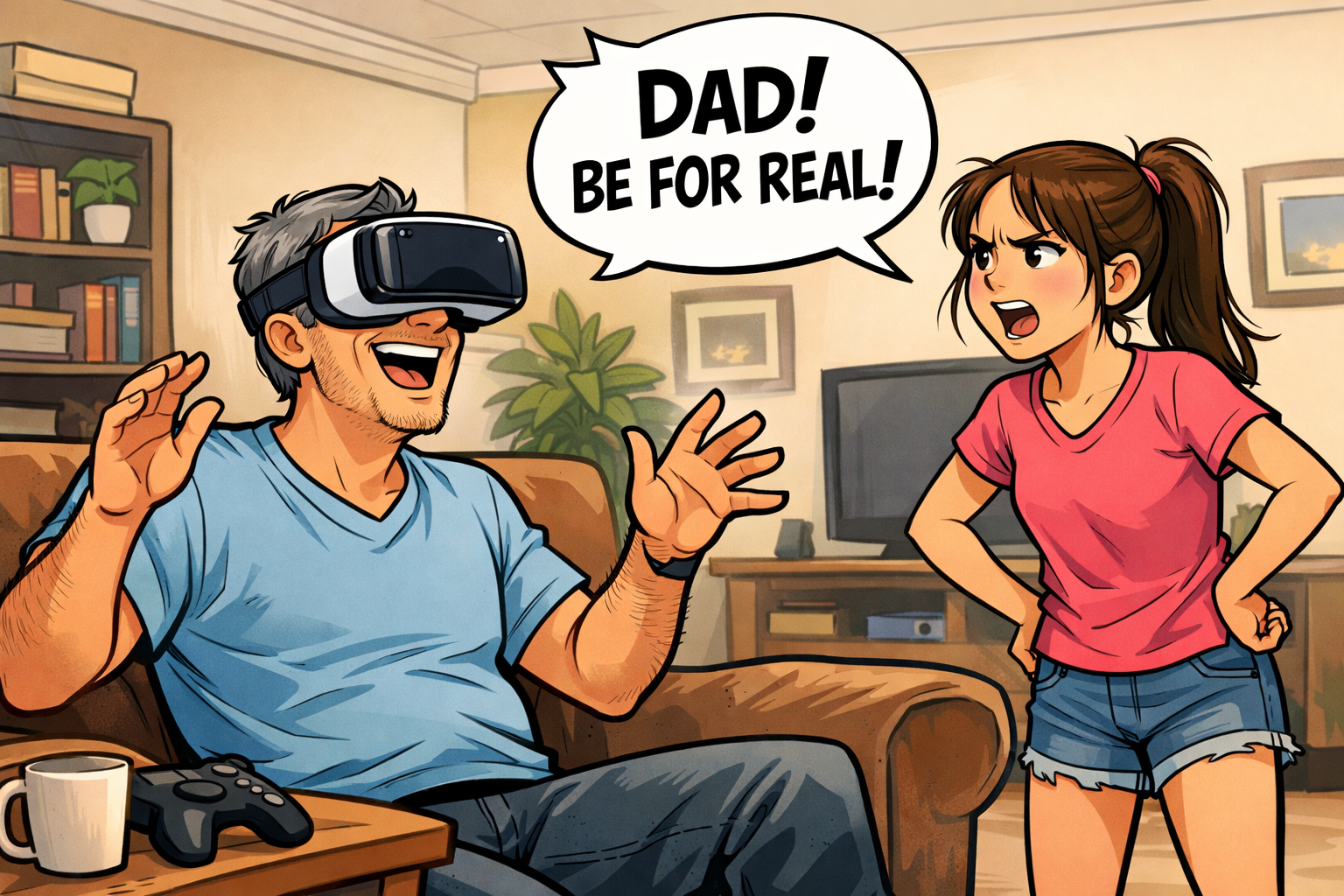
New research shows that adults over 50 are rapidly increasing their use of digital tools, including smartphones, video communication, smart devices, and AI-powered assistants. Rather than lagging behind, this group is adopting technology selectively and purposefully—especially where it improves health, communication, and independence.
⭐ Why It Matters: Human Adaptability Doesn’t Expire
This challenges a deeply ingrained myth that technological fluency belongs mostly to the young. Instead, it suggests that when technology becomes genuinely useful—not merely novel—people of all ages adopt it. That bodes well for AI as a broadly empowering tool rather than a generational divider.
Source:
AARP — https://www.aarp.org/pri/topics/technology/internet-media-devices/2026-technology-trends-older-adults/
Biology-Inspired AI Could Dramatically Reduce Energy Use
Researchers are increasingly designing AI systems based on principles from human biology and neuroscience. These approaches aim to reduce the massive energy demands of today’s large models by favoring efficiency, sparsity, and adaptive learning—more like brains, less like brute-force computation.
⭐ Why It Matters: Intelligence Without Extraction
One of the strongest critiques of AI is its environmental cost. Biology-inspired approaches suggest a different future—one where intelligence scales through elegance rather than excess. If successful, this shift could reconcile exponential intelligence growth with planetary limits.
Source:
TechXplore — https://techxplore.com/news/2025-10-brain-ai-energy-boost.html
Humans Are Beginning to Adopt the Language of AI
Recent linguistic research suggests that patterns common in AI-generated text are starting to appear more frequently in human speech and writing, particularly in podcasts, academic talks, and online communication. This reflects a feedback loop: AI learns from us, and we subtly learn from it in return.
⭐ Why It Matters: Co-Evolution Has Already Begun
Language shapes thought. The fact that AI is beginning to influence how we speak suggests we’re not just using these systems, we’re adapting alongside them. This isn’t loss of individuality but cultural evolution happening at machine speed.
Source: arXiv (summary) — https://www.scientificamerican.com/article/chatgpt-is-changing-the-words-we-use-in-conversation/
🔥 Quick Picks
Generative AI Adoption Continues to Accelerate
Enterprise surveys show generative AI is now outpacing traditional AI tools in adoption, becoming embedded in everyday workflows across industries. This signals that AI is moving from specialized use to general-purpose infrastructure.
Source: PR Newswire — https://www.prnewswire.com/news-releases/new-study-reveals-generative-ai-has-eclipsed-other-ai-applications-in-the-enterprise-fueling-a-new-cohort-of-ai-leaders-and-cloud-providers-302244249.html
Researchers Are Using AI at Record Levels
A global survey found AI usage among researchers jumped from 57% to 84% in one year. As expectations mature, AI is settling into a role as a dependable intellectual partner rather than a magic solution.
Source: Wiley — https://newsroom.wiley.com/press-releases/press-release-details/2025/AI-Adoption-Jumps-to-84-Among-Researchers-as-Expectations-Undergo-Significant-Reality-Check/default.aspx
Deepfake Detection Becomes a Security Priority
Rising sophistication of deepfakes is pushing organizations to invest in AI-based authentication and verification tools. Trust, not novelty, is becoming the central challenge of the AI era.
Source: PR Newswire — https://www.prnewswire.com/news-releases/2025-tech-trends-report-info-tech-research-group-unveils-new-insights-on-the-future-of-ai-quantum-computing-and-cybersecurity-302250991.html
Agentic AI Systems are Emerging
Analysts expect AI systems capable of autonomous planning and action to become a defining trend. This represents a shift from tools that respond to commands to systems that participate in workflows.
Source: TechTarget — https://www.techtarget.com/searchenterpriseai/tip/9-top-AI-and-machine-learning-trends
Global Attitudes Toward AI Remain Mixed
Pew Research finds excitement and concern rising together worldwide. The future of AI will be shaped as much by public trust as by technical capability.
Source: Pew Research — https://www.pewresearch.org/global/2025/10/15/concern-and-excitement-about-ai/
✔ We're official! Singularity Sanctuary is now a registered LLC and open for business! Our business model may change as we grow, but for now we have everything we need to develop a mindset that faces exponential change with optimism and intention. It's not about believing in technology; it's about believing in ourselves and our ability to create the future we want.
✔ Our next episode of The Way of Tech is in the works. Episode #3 will focus on failure as a form of practice, an attitude essential for inventors and scientists, but one that can also be a useful life skill.
✔ Now that all the pieces are in place, it's time to get serious about membership. Hopefully, like technology, Singularity Sanctuary's growth will be exponential. Regardless, it's time to begin our monthly Singularity Circles. Our first will happen on Saturday, January 3, 2026, at 10:00 AM Pacific Time (1 PM ET / 6 PM UK / 7 PM CET). A Zoom link and reminder will be sent out in advance of this online gathering. Feel free to invite a friend or more.
Closing Reflection: Art, Technology, and What We Really Mean by “Human”
By Todd Eklof
According to Hollywood Reporter, actor Leonardo DiCaprio recently said, “I think anything that is going to be authentically thought of as art has to come from the human being,” suggesting that AI, however impressive, can never create real art because it lacks humanity. This is an understandable instinct, and one that echoes a long tradition of anxiety whenever new tools emerge. But it’s worth pausing to ask whether this distinction still makes sense in a world where art and technology have been intertwined for centuries.
Almost all art today already relies on technology. Cameras mediate our photography. Software edits our films. Digital tools shape music, architecture, animation, and design. Even paintings and sculptures—the most “traditional” of art forms—are experienced largely through technological reproduction: screens, photographs, books, and projections. Our encounter with art is already deeply technological and has been for a very long time.
Consider film and music. The actors we see on screen were once captured on strips of celluloid. Today they are encoded as digital files, streamed to us as patterns of light and sound. The voices we hear through our music platforms are no less human because they arrive as data rather than vibrations on a stage or in a concert hall. We don’t experience these works as less authentic because they are technologically mediated. We experience them as human expressions delivered through modern tools.
What’s new with AI isn’t the presence of technology in art, it’s the intimacy of that presence.
AI systems are not alien minds creating in isolation. They are built from human mathematics, trained on human language, images, music, and ideas, and guided by human intention. They are, in a very real sense, compressed reflections of our collective knowledge, culture, and creativity. When AI generates an image, a melody, or a paragraph, it is remixing patterns that originated in human experience.
"AI doesn't replace human creativity any more than a violin replaces the musician. It expands what the human spirit can express."
Think of AI not as an artist replacing the human, but as a new kind of instrument. A violin does not create music by itself. A camera does not feel emotion. What matters is the human hand, ear, eye, and imagination that use the tool to express something meaningful. AI, like every transformative technology before it, expands the range of what can be expressed, but it does not supply the purpose.
That doesn’t mean AI replaces the artist. Just as the camera didn’t replace painters or the synthesizer didn’t replace musicians, AI changes how creativity happens, not why it happens. Meaning still comes from human values, choices, context, and interpretation. Art isn’t defined solely by the tool that produces it, but by the intention behind it and the response it evokes.
The deeper question, then, isn’t whether AI can make art. It’s whether we are willing to recognize that human creativity has always advanced by extending itself through tools. From cave pigments to printing presses to digital media, each new technology has expanded the ways we express what it feels like to be alive—to be human.
AI may be the most powerful creative instrument yet—not because it replaces humanity, but because it forces us to clarify what we value most about being human. If art is about expression, meaning, and connection, then those qualities still originate with us. AI simply becomes another way for them to flow into the world.
In an exponential age, the challenge isn’t to defend a shrinking definition of humanity. It’s to carry our humanity forward, into the tools we create and the future we’re building together.